Making Fruit-Wines, Liqueurs & Rumtopf
© Kat Morgenstern October 2026
At Samhain, the Goddess retreats into the deep vault of the earth to join her dark lover in the Underworld. Life withdraws, and the landscape turns bleak, cold and grey. The last fruits, nuts and berries still hang in the bushes, but most are gone. Few flowers withstand the season's call until the frost kills them off. Many of the migratory birds have already left on their journey south.
It is a melancholy time; a time to turn inward.
Samhain: The Beginning of the Dark Half of the Year
Samhain marks the end of the harvest and the beginning of the dark half of the year. In the Gaelic tradition, it was one of the great seasonal turning points when the old year gave way to the new. A liminal time when the boundaries between the ordinary world and the Otherworld were thought to become permeable, and otherworldly beings could pass easily through the veil.
Many modern customs associated with this time of the year, Halloween, the Mexican Dia de los Muertos, and even the Christian All Souls, have grown from older seasonal celebrations and have become a complex mixture of old and new folk traditions.
We mark this season by remembering those who have gone before us. Death is but a stage of the wheel of life. Far below the surface, the Goddess sheds her wilted gown. Throughout the winter months, she remains in deep meditation as she regenerates her vitality.
What appears to us as death is not an ending, but a necessary withdrawal: seeds sleep beneath the soil, roots rest, and the living world gathers its strength for another spring.
Table of Contents
Plants of Samhain: Life, Death and the Otherworld
The plants of Samhain reflect this threshold between life and death. Some belong to the autumn landscape itself; others have acquired associations with the dead, the Otherworld and seasonal transition through folklore and mythology.
Apple: The Fruit of the Otherworld
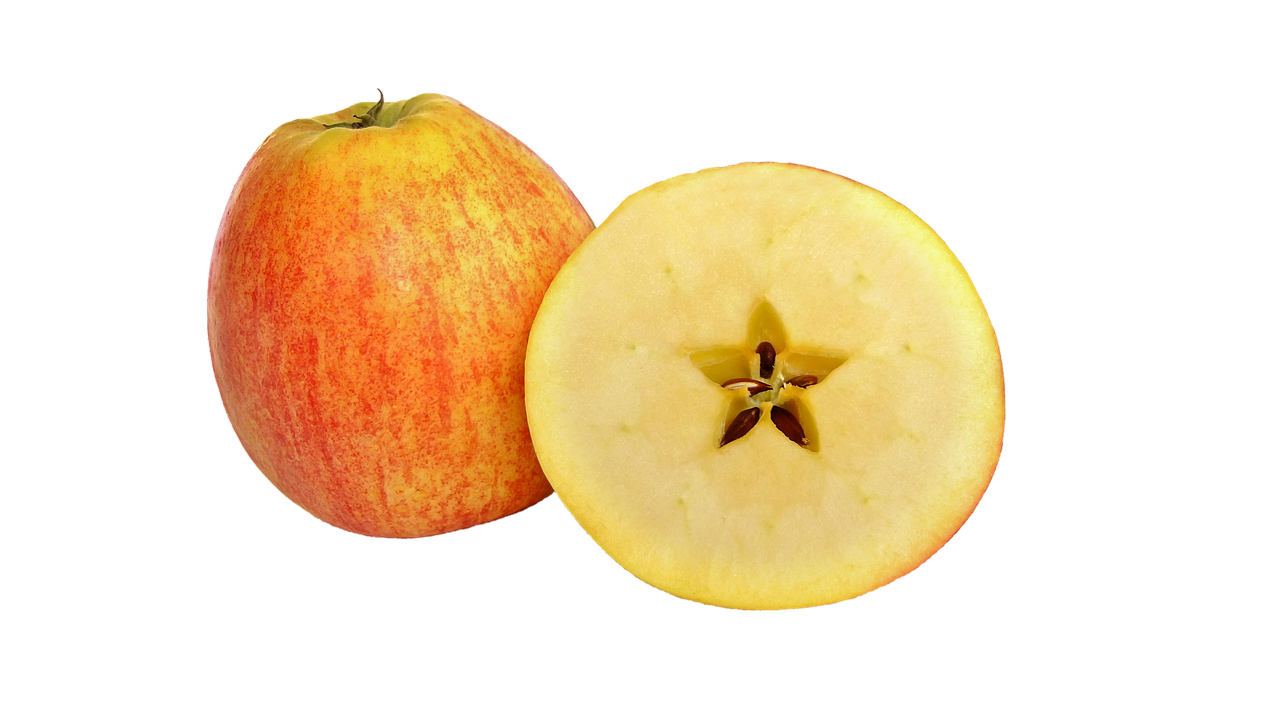
The apple is perhaps the most characteristic of the Samhain plants. An autumn fruit associated with harvest, divination and the Otherworld, apples appear in many Halloween customs such as apple-bobbing and other forms of fortune-telling. In Celtic and northern European folklore, the apple is a fruit of the Otherworld, associated with the Goddess and with the mysteries of death and return.
Ivy: Evergreen Life at the Threshold of Winter
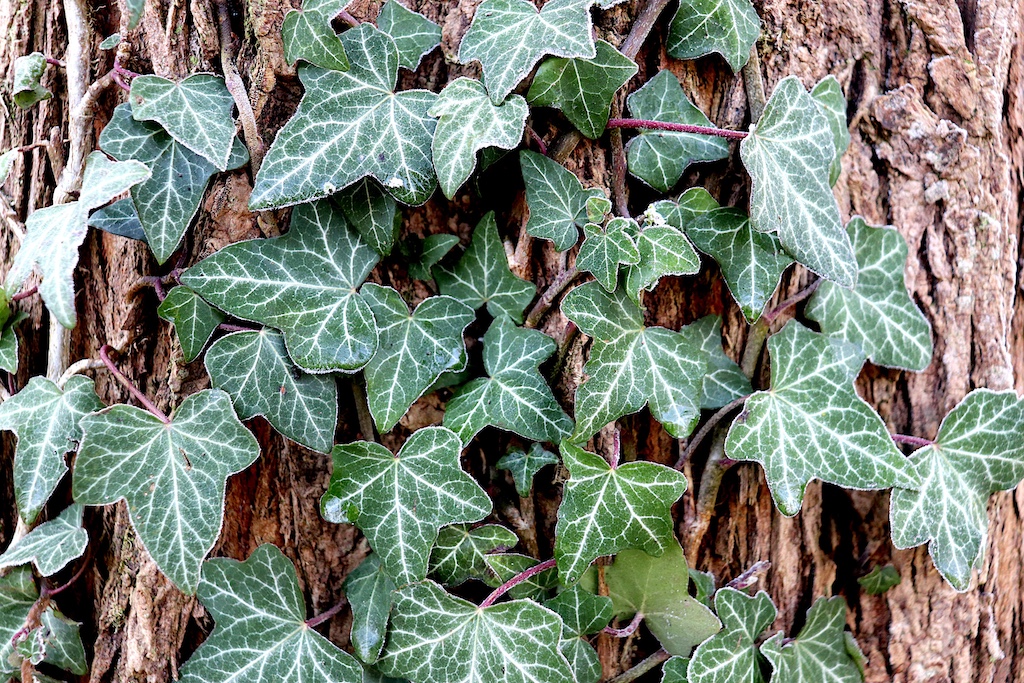
As most of the vegetation is dying back, ivy not only remains green throughout the winter, but even begins to flower offering a welcome source of nectar for hungry bees and other insects late in the year, when few other flowers remain.
Juniper: Protection from the dark powers
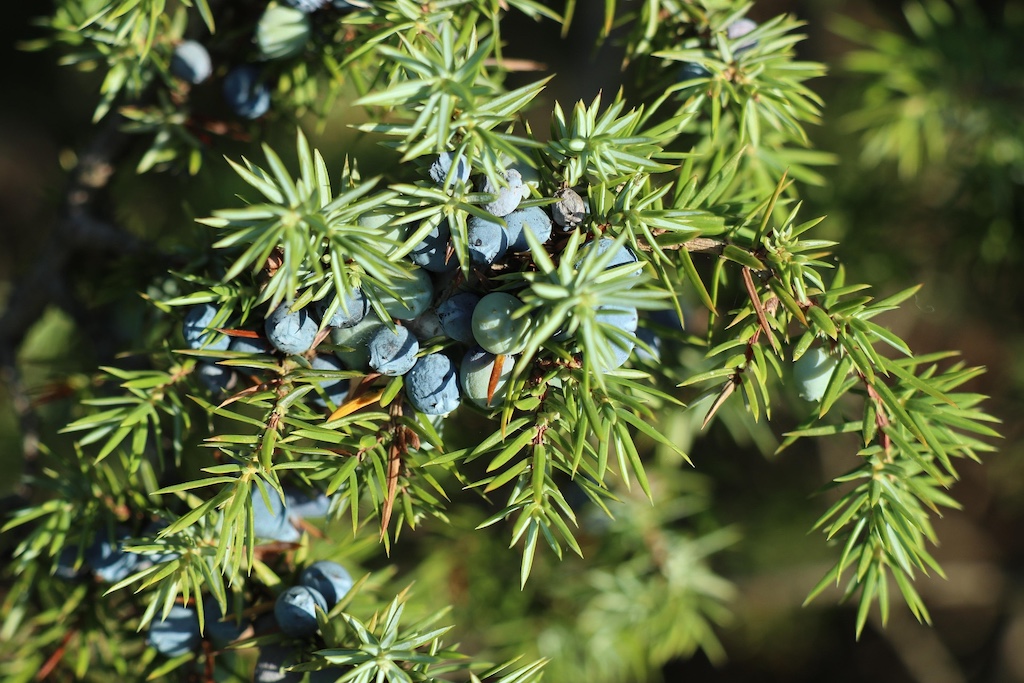
Juniper symbolises protection and purification. Its aromatic branches are hung above the stable doors to protect the animals throughout the summer season. At Samhain, they are burnt, thus getting rid of the spirits that got entangled in the prickly twigs. The aromatic smoke purifies and protects the homestead. (Storl) Its evergreen nature marks it as a plant of endurance: green when the world around it has become bare, fragrant when the landscape is damp and cold.
Alder: The Tree of Wetlands and the Otherworld
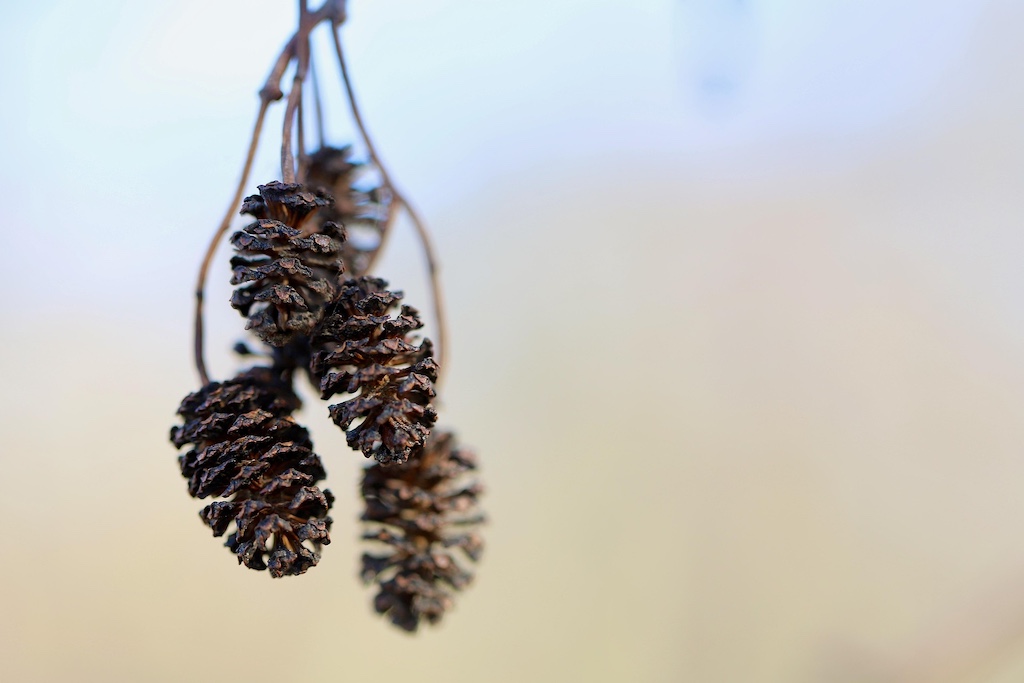
Alder belongs to the wetlands, moors, and shadowy margins of the landscape. Growing beside streams, ponds, marshes and in waterlogged woodland, it inhabits eery spaces that can feel Otherworldly themselves - especially in the late autumn when they are frequently shrouded in fog.
Pomegranate: Persephone and the Underworld
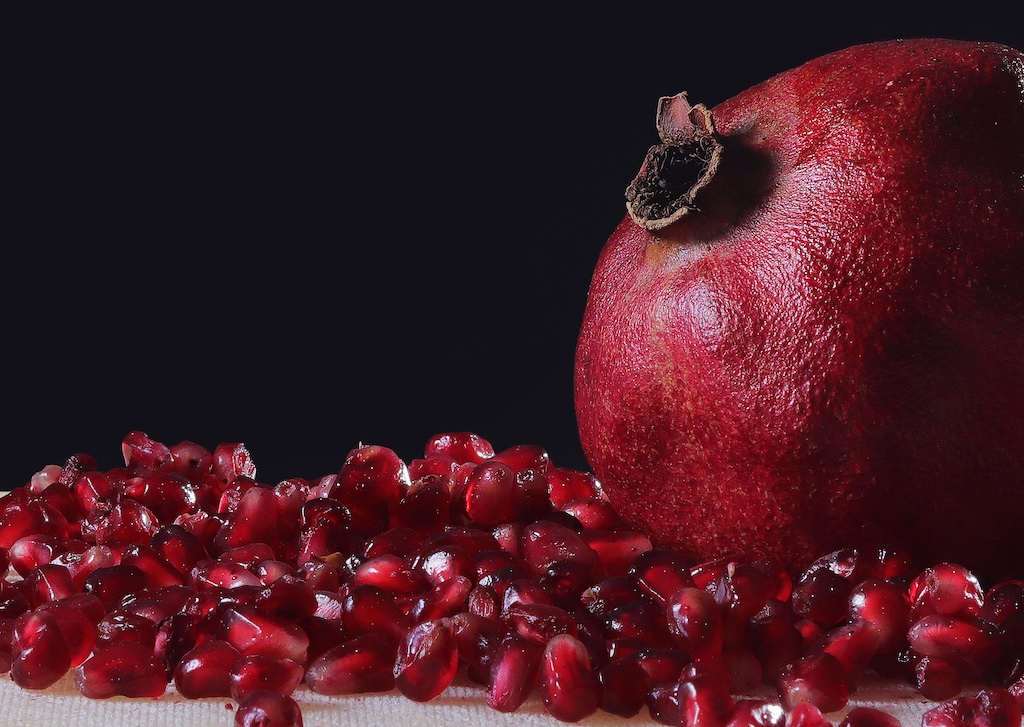
Although not associated with Celtic tradition, the pomegranate is the fruit that binds Persephone to the Underworld. When Hades kidnapped her and brought her to his dark realm, he offered her the seeds of the pomegranate, a fruit symbolising the infinite potential of the seed. By eating the pomegranate, she became bound to the world of the dead and thereafter had to divide her time between the world above and the world below. When she joins Hades at the beginning of the dark season the life-force retreats with her underground. But when she returns in the spring she brings renewal as the seeds have germinated and are ready to grow.
The pomegranate therefore embodies the paradox of Samhain: death and life are not opposites, but two parts of a continuing cycle.
Opium Poppy: Demeter, Sleep and the Mystery of Death
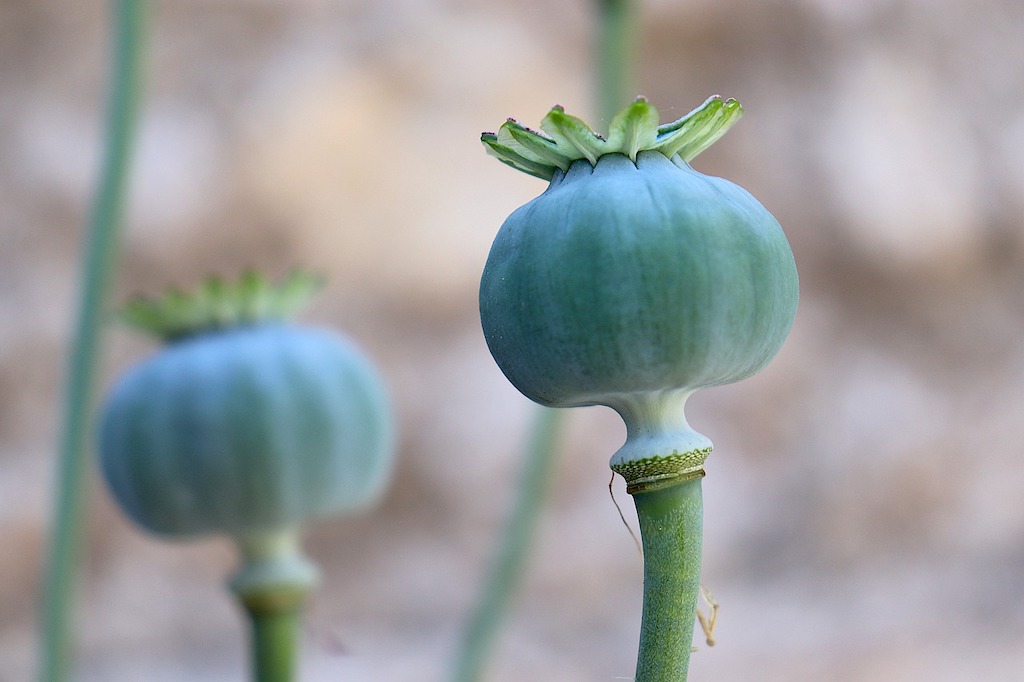
The opium poppy, Papaver somniferum, belongs to the same story through its ancient associations with Demeter and Persephone. Grieving the loss of her daughter, Demeter was devastated, letting the earth wilt and die. All the plants and animals were unable to console her. Only poppy managed to soothe her pain and allowed her to drift into a sleep of oblivion. Meanwhile, the poppy’s belly full of tiny seeds are a promise of life and renewal to return when Persephone rises again from the Underworld.
From Turnip Lanterns to the Halloween Pumpkin
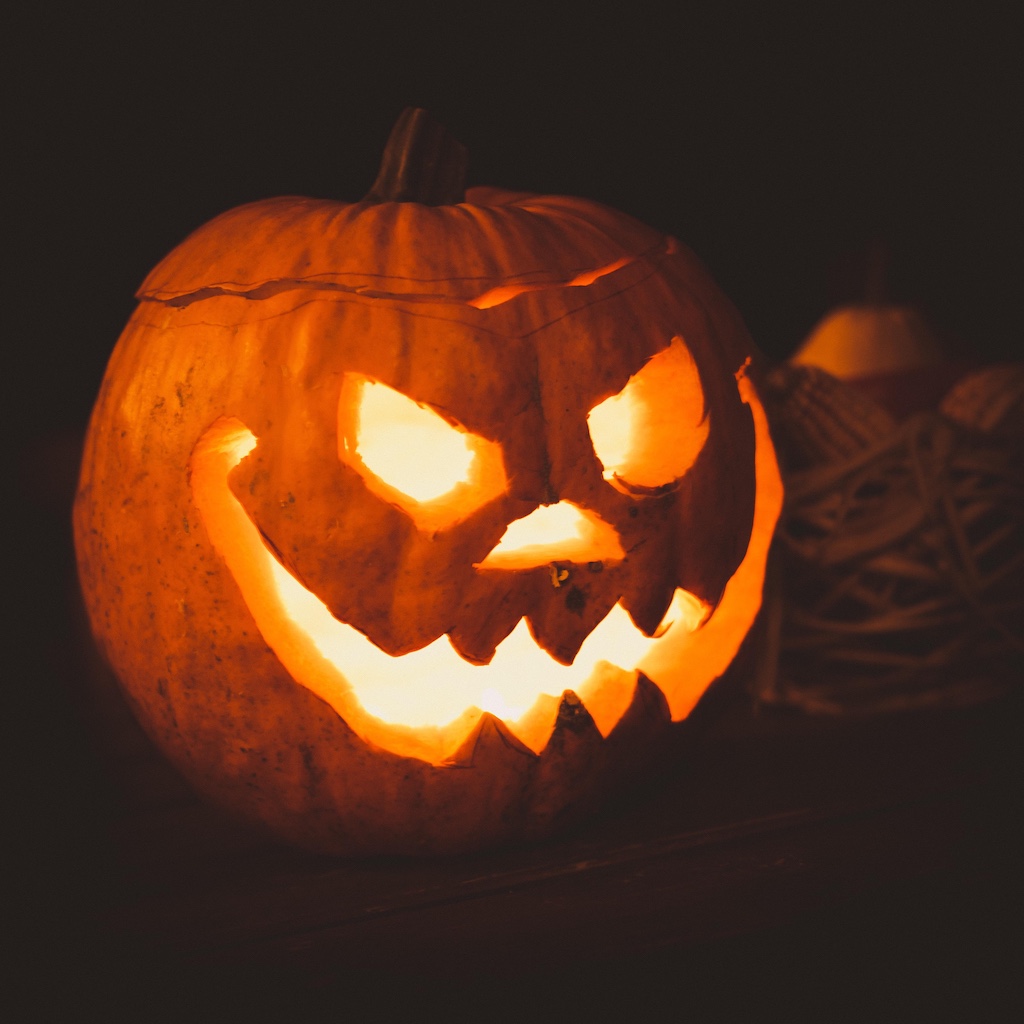
But what about Pumpkins, the best known Halloween symbol of all? A late season vegetable that can sustain us through much of the winter, and filled with a mass of seeds, pumpkins too, are a symbol of life, hope and possibility. But they are a new world symbol. They are a New World plant, unknown in Europe before the voyages of the late fifteenth century.
But the tradition of carving a vegetable, perhaps as a representation of the otherworldly beings that go about the country at Samhain, or to frighten them off, is much older. In Ireland and Scotland turnips and other root vegetables were traditionally hollowed out and carved into lanterns. When these traditions travelled to North America, the native pumpkin eventually replaced the harder, smaller turnip and became the familiar jack-o'-lantern of Halloween.
The pumpkin therefore belongs to the later history of Samhain rather than its ancient Gaelic origins — a good reminder that festivals change as people, plants and traditions travel.
The spiritual meaning of Samhain: A Time for Reflection and Remembrance
As the Sun's power wanes we face the cold and darkness. The sunlight becomes bleak and the days grow shorter. Nature withdraws. The fields are resting, the trees shed their leaves, and many of us - and other animals retreat into ‘hibernation mode’. It is a time for reflection, meditation and regeneration.
Let us honour the darkness rather than fear it.
Use this time to honour those who have gone before us. Cherish our blessings and let go of what bogs us down and no longer serves us.
Gather your inner strength in contemplation. Allow yourself to become quiet. Beneath the surface, unseen by us, the work of renewal has already begun.
The wheel has turned. The old year is dying, but the seed of the new year is already sleeping in the darkness.
Keep faith. Soon, the light will be born again and life will return to the earth.
Samhain prayer
As the life force retreats below ground
and nature prepares for its long slumber,
may we keep hope alight in our hearts
while we wait for the Sun's return.
May we find the strength to let go
and put to rest
all that is tired and worn,
making space for what is yet to grow.
May we remember those who have gone before us,
honour the mysteries of death and the Otherworld,
and accept that everything must change.
For beneath the darkness,
in the deep womb of the earth,
life regenerates in silence.
May we trust the darkness,
trust the turning of the wheel.