
Table of Contents
Few wildflowers are as common and familiar as yarrow. It grows almost everywhere – along country paths, roadside verges, meadows, pastures and waysides – yet most people pass it by without giving it a second glance. They don’t know what they are missing. Beneath yarrow’s humble appearance lies one of Europe's oldest and most versatile medicinal herbs.
For thousands of years Yarrow has come to the aid of shepherds, soldiers, and healers, staunching bleeding wounds, easing ‘female troubles’, flavouring ale, casting its love magic, and divining the future.
Indeed, the humble yarrow has earned immortal fame in the ancient myths and legends we still tell today. It is a remarkable herb, with a remarkable story.
Description:
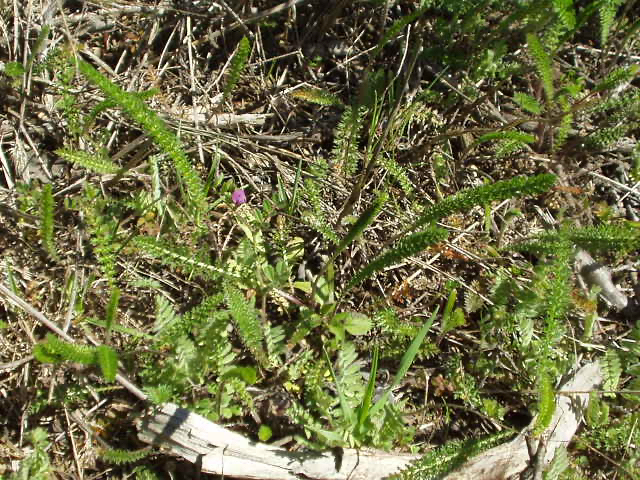
The first signs of yarrow appear in early spring. Long before the flower stalks emerge, its delicate, feathery fronds form soft green rosettes close to the ground. At this stage they are tender, aromatic, and make an excellent addition to soups and salads.
As summer approaches, the stems begin to rise, eventually reaching 30–80 cm in height. The leaves become tougher, pricklier and more finely divided- the inspiration behind its species name millefolium – which literally means ”a thousand leaves".
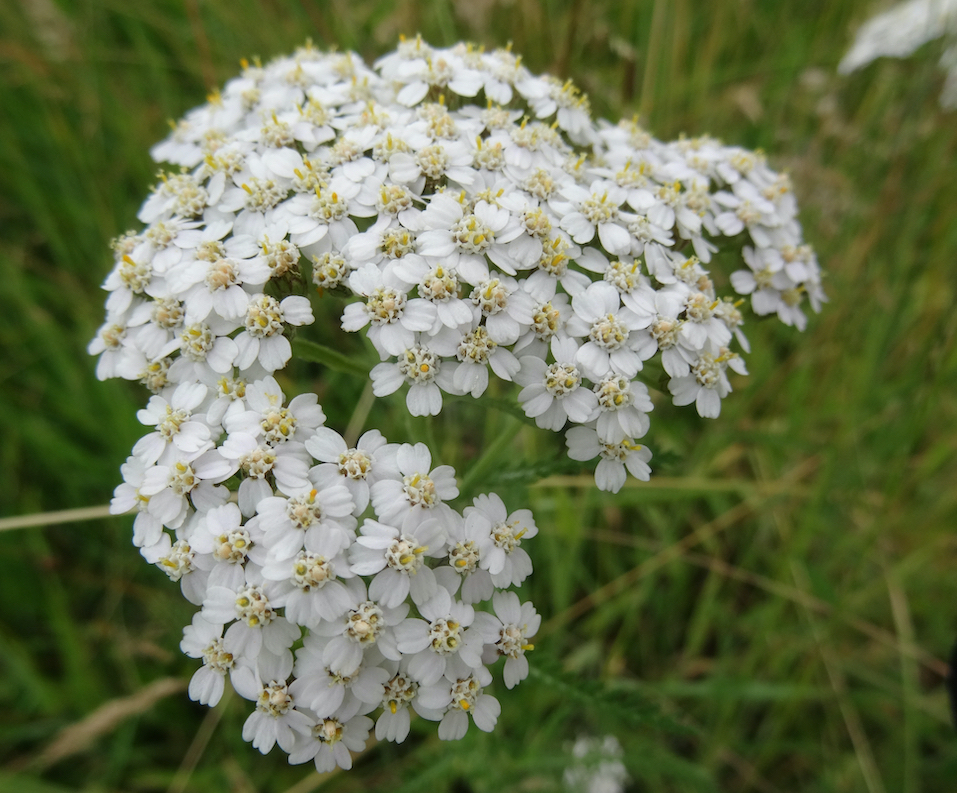
By June and July, the flat-topped flower clusters begin to open. At first glance they resemble the umbels of the carrot family, but appearances can be deceptive. Who would have thought that yarrow belongs to the daisy family (Asteraceae)! Yet, a closer look reveals that each "flower" is in fact a composite flower head made up of tiny individual disk florets, surrounded by petal-like ray-florets, just like a daisy or a dandelion.
Its distinctive aromatic scent, feathery foliage and conspicuous flower heads make yarrow one of the easiest herbs to recognise. Nevertheless, beginners should always identify plants carefully. Yarrow’s characteristic features do bear semblance to some members of the carrot family, some of which are highly poisonous.
Ecology
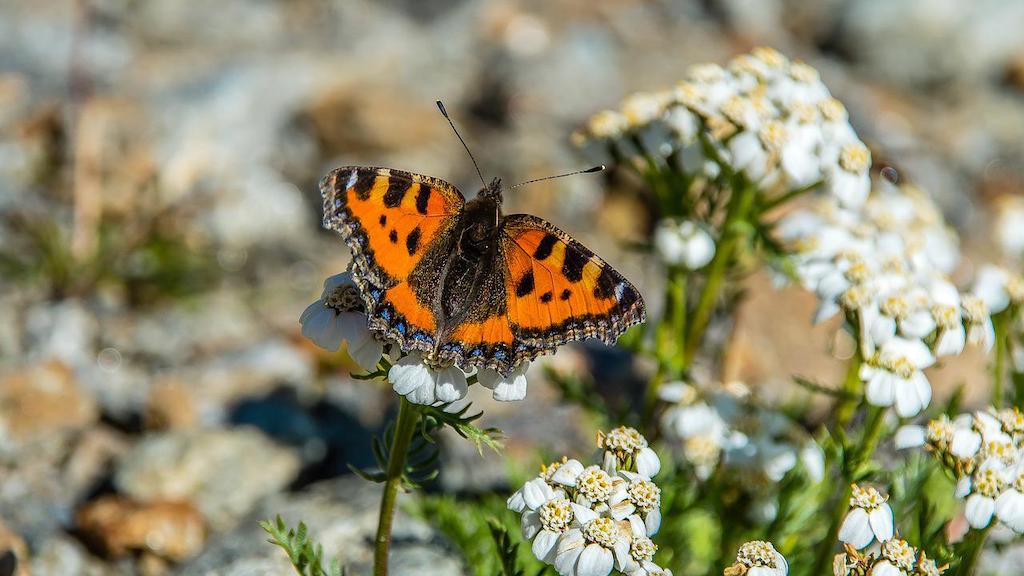
Bees, butterflies and other pollinating insects love yarrow for its rich reserves of nectar. Gardeners tend to prefer the cultivated varieties of yarrow, but they always welcome it for attracting predatory insects that help keep aphids in check. Yarrow acts as a healer, radiating its protective and healing powers throughout its neighbourhood.
History and Mythology
Etymology - what's in a name
Yarrow's botanical name, Achillea millefolium, tells two stories.
The genus Achillea commemorates Achilles, a legendary Greek hero, while millefolium means "a thousand leaves", referring to the finely divided foliage.
According to Greek mythology, Achilles was the son of Peleus and the sea nymph Thetis. Knowing that her son was destined to become a great warrior, Thetis schemed to make him invincible by dipping him into the River Styx. But by holding him by one heel, she inadvertently covered that small part of his body – which literally became his vulnerable spot, his ‘Achilles heel’.
As a boy, Achilles was entrusted to the wise centaur Chiron, the legendary teacher of heroes, and one of the greatest healers of Greek mythology. He instructed Achilles not only in hunting and warfare but also in the healing arts. During the Trojan War, Achilles developed a reputation as a healer, tending to the bleeding wounds of his fellow warriors aided by the humble yarrow. It thus earned its common name ‘Herba Militaris’ or simply ‘Militaris’.
All the classical physicians, from Dioscorides to Paracelsus and beyond, praised Yarrow as a wound healer, and for centuries regarded it as indispensable for treating cuts and injuries, both internal and external.
The English name Yarrow is much older than its botanical name. It derives from the Old English gearwe, an ancient Germanic word whose original meaning has been lost in time. Long before Linnaeus gave it a Latin name, country folk already knew this plant well enough for its name to become deeply rooted in the language.
Although the name Militaris invokes associations with Mars, the god of war, Culpeper instead assigned yarrow to Venus. He regarded it as a cooling, drying and binding herb, emphasising its ability to constrain ‘immoderate fluxes’ which Culpeper uses as a rather flexible term that can be applied to inner or outer bleeding, strong menstruation, or diarrhoea.

Herb Lore
Yarrow may seem unspectacular, but it plays a significant role in European folklore.
During the Middle Ages it was regarded as a powerful protective herb. Like many medicinal plants, it acquired a reputation for warding off evil influences. Not only was it used as a protective charm; it was even featured in exorcism rites.
France
In France Yarrow is known as Herbe de Saint Joseph. According to legend, the infant Jesus gave Joseph some Yarrow after he accidentally cut himself while working on his carpentry. Of course, Yarrow stopped the bleeding more or less at once and healed the wound.
Britain
British folklore paints a rather different picture.
Mrs M. Grieve recounts an old divination custom from eastern England in which young women would place Yarrow leaves in their noses while reciting:
"Yarroway, Yarroway bear a white blow
If my love love me, my nose will bleed now."
Should the nose begin to bleed, the omen was taken as proof that their sweetheart's affection was genuine.
Another charming folk name, Venus' Eyebrow, refers to Yarrow's delicately divided leaves, which were thought to resemble the graceful eyebrows of Venus, goddess of love. Unsurprisingly, the herb became associated with romance and matters of the heart.
Placed beneath the pillow after reciting the traditional charm,
"Thou pretty herb of Venus tree,
Thy true name be Yarrow;
Now who my bosom friend must be,
Pray tell thou me tomorrow."
it was believed to reveal the inquirer’s future husband in a dream.
China
On the other side of the world, Yarrow serves a very different purpose.
Bundles of dried Yarrow stalks have traditionally been used to consult the I Ching, the ancient Chinese Oracle. Here, the plant acts as a balancing force between Yin and Yang and bridge between the comprehension of the human mind and the unfolding patterns of nature.
Central Europe
Throughout Central Europe, Yarrow appears in many seasonal customs.
It is one of the traditional herbs included in the famous Nine-Herb Soup eaten on Maundy Thursday, a spring tonic believed to purify the body and protect against illness throughout the coming year.
In Catholic tradition, Yarrow takes a place of honour in the herb bundles blessed on the Feast of the Assumption in mid-August. Although now celebrated as a Christian festival, the custom almost certainly reaches back to much older rites that honoured the healing plants gathered at the height of summer for the following year.
Yarrow and Lughnasadh
By late July and early August, Yarrow is usually in full bloom. At Lughnasadh, the first harvest festival celebrated on August 1st, its white flower heads mingle with knapweed and wild marjoram.
The period between Mid-Summer and Lughnasadh, when the Sun is at its zenith, is the most important time of the year for gathering medicinal herbs. Many plants follow that cycle of the sun and their potency peaks at this time as well.
Many of the harvest blessing traditions that survive today are echoes of these much older seasonal customs.
Food
The young spring leaves have a pleasantly aromatic, slightly bitter flavour that works well in soups, salads, omelettes, herb butters and fresh cheeses. Like many bitter herbs, they gently stimulate digestion and are best enjoyed in moderation. Too much of a good thing can quickly become overpowering.
As the season progresses the leaves become considerably more bitter. Historically this made Yarrow a valued brewing herb.
Before hops became the standard flavouring for beer, brewers throughout Europe used various aromatic herbs known as gruit. Yarrow was chief among them, lending both flavour and reputed preservative qualities to the ale. Although the Bavarian Purity Law of 1516 restricted German brewers to hops, barley and water, many British brewers continued using herbal mixtures for centuries afterwards.
Yarrow flowers can also be infused into vinegars or used sparingly with other aromatic herbs, in herb salts.
Arts & Craft
The flowering tops can be used to dye wool and other natural fibres. It yields yellowish ochre to olive green tones, which can be modified using iron as a mordant, which shifts the colours towards the darker spectrum. But use iron cautiously with animal fibres, as prolonged exposure can damage them.
Essential oil
Steam distillation produces a remarkably deep blue essential oil. During distillation, naturally occurring proazulenes are transformed into chamazulene, the same intensely blue anti-inflammatory compound found in german chamomile, though yarrow often contains even higher concentrations.
Yarrow essential oil is valued in aromatherapy for soothing red, sore or inflamed skin and promoting the healing of minor wounds, rashes and non-allergic dermatitis. It is also traditionally used to ease menstrual discomfort and to promote healthy circulation.
Yarrow is cherished for its balancing properties, particularly during times of emotional upheaval associated with hormonal changes.
Scent (English Yarrow)
English yarrow has a herbaceous, aromatic, and slightly camphoraceous scent - medicinal and clean. It blends well with lavender, rosemary, bergamot, eucalyptus, chamomile, cedarwood, geranium, clary sage, frankincense.
Scent Blue Yarrow
The scent of Blue Yarrow oil is sweeter, deeper, soothing and more complex, with almost spicy undertones. It blends well with cedarwood, cypress, pine, chamomile, lavender, helichrysum, clary sage, omumbiri, and hyssop.
Caution:
Those sensitive or allergic to Asteraceae family should avoid this oil. All essential oils should be properly diluted before topical use.
Medicinal Uses:
As a medicinal herb, yarrow remains as relevant today as it was in the time of Achilles.
Parts used:
The aerial parts – young leaves and flowering tops.
Harvest the tender leaves in spring if you wish to eat them fresh. For medicinal use, gather the flowering tops on a dry day during peak flowering, usually between June and August, and dry them promptly in a warm, airy place.
Constituents
Volatile oils, flavonoids, sesquiterpene lactones, tannins, bitter principles and numerous other phytochemicals contribute to yarrow's wide-ranging actions.
Traditional Uses
Yarrow is best known as a wound herb. Fresh leaves can be bruised and applied as a field dressing, while traditionally, the powdered dried herb was sprinkled onto bleeding wounds. Strong infusions make an excellent wash for cuts, abrasions and inflamed skin.
Taken internally, yarrow acts as a bitter tonic that stimulates digestion by encouraging the flow of digestive secretions and supporting liver and gallbladder function. It also eases cramping of the digestive tract and can help to relieve flatulence.
It is equally valued as a women's herb. Traditionally, it was used to encourage delayed menstruation, to relieve painful periods, and to reduce excessive menstrual bleeding.
Yarrow also acts upon the urinary system. It is a gentle diuretic and anti-inflammatory herb, making it a useful therapeutic agent for minor urinary tract infections.
Perhaps surprisingly, yarrow is one of the classic fever herbs. By gently encouraging perspiration, it supports the body's natural cooling mechanisms during the feverish stages of colds and influenza. Taken before a sauna or sweat-lodge, it promotes elimination of toxins via the skin.
Yarrow improves the peripheral circulation, making it a favourite tonic for treating sluggish circulation The improved blood flow warms cold hands and feet. A helpful aid as a general tonic, especially during convalescence.
Modern laboratory research has confirmed many of yarrow's anti-inflammatory, antimicrobial and antioxidant properties, lending support to most of its traditional applications. As always, however, herbal medicine works best when herbs are selected specifically for a person’s individual needs.
Harvesting with Respect
Yarrow is widespread and abundant across much of Europe, but abundance should never be an excuse for carelessness. Harvest only from healthy populations, avoid roadsides and polluted ground, and always leave plenty of flowering plants behind for pollinating insects so the seeds can spread far and wide for future generations.
Caution
People who are sensitive to members of the daisy family (Asteraceae) may occasionally react to Yarrow. If you are unsure, test a small amount first before using it medicinally or as a wild food.
Pregnant women and anyone taking prescription medication should seek professional advice before using medicinal quantities of Yarrow.
Further Reading
Classical Sources
- Dioscorides, Pedanius. De Materia Medica. Written c. AD 77. English translation by Lily Y. Beck. Olms-Weidmann, 2005.
Renaissance & Traditional Herbals
- Culpeper, Nicholas. The Complete Herbal. First published 1653. Numerous modern editions; Wordsworth Editions, 1995.
- Grieve, Margaret. A Modern Herbal. First published 1931. Dover Publications, 1971 (reprint).
Modern Herbal Practice
- Hoffmann, David. Medical Herbalism: The Science and Practice of Herbal Medicine. Healing Arts Press, 2003.
- Weiss, Rudolf Fritz & Fintelmann, Volker. Herbal Medicine. 2nd edition. Thieme, 2000.
- Mills, Simon & Bone, Kerry. Principles and Practice of Phytotherapy: Modern Herbal Medicine. 2nd edition. Churchill Livingstone / Elsevier, 2013.
Herbal Traditions & Folklore
- Mabey, Richard. Flora Britannica. Sinclair-Stevenson, 1996.
- de Bairacli Levy, Juliette. A Herbal Handbook for Everyone. Faber & Faber. Various editions.
- Treben, Maria. Health Through God's Pharmacy. Ennsthaler Verlag. Various English editions.
Scientific References
- Blumenthal, Mark (Ed.). The Complete German Commission E Monographs. American Botanical Council, 1998.
- ESCOP. ESCOP Monographs: The Scientific Foundation for Herbal Medicinal Products. European Scientific Cooperative on Phytotherapy. Latest edition.
- Saeidnia, S., Gohari, A.R., Mokhber-Dezfuli, N. & Kiuchi, F. (2011). "A Review on Phytochemistry and Medicinal Properties of the Genus Achillea." DARU Journal of Pharmaceutical Sciences, 19(3), 173–186.