How To Make Rose-Hip Syrup

How To Make Rose-Hip Syrup

u003ch2 class=u0022p1u0022u003eMaking Rose hip Syrupu003c/h2u003enu003cp class=u0022p2u0022u003eu003c/pu003enu003cp class=u0022p1u0022u003eRose hips are a funny fruit: Gourd shaped little piglets, wafting in the wind! The bright red berries sprinkle the landscape with a glorious, shiny dash of color. In their early stages, rose hips are rock hard and difficult to pick. The coat is thin, the fruit flesh meager, and their bellies are filled with an abundance of hard little seeds that are embedded in fine 'hair. Perhaps, this hair is just as irritating to a bird's throat as it is to a human one. Not so long ago, schoolchildren tormented each other by using it as 'itching powder'. The best variety to use for this purpose is the Beach Rose, Rosa rugosa, with its big, fat squash-shaped hips. It yields an abundance of fluffy stuff.u003c/pu003enu003cp class=u0022p2u0022u003eu003c/pu003enu003cp class=u0022p1u0022u003eI can never resist the temptation of biting into the first rose hips that turn red in September, even though I know they are still hard and very sour. Inevitably, I end up spitting out the seeds and trying to get rid of the little hairs.u003c/pu003enu003cp class=u0022p2u0022u003eu003c/pu003enu003cp class=u0022p1u0022u003eRosehips are best picked after the first frost when their outer cortex turns soft and sticky. At this point, they can be gathered without a struggle and are much easier to process, too. But depending on your climate, that may come late, by which time there are not so many hips left, or they lost their appealing looks. If you have plenty of space in the freezer, you can also pick them when they are fully ripe and then place them into the freezer where they can soften and you can use them when you are ready for a day of action.u003c/pu003enu003cp class=u0022p1u0022u003eu003c/pu003enu003cp class=u0022p1u0022u003eMy favorite way to preserve them is to turn them into syrup or conserves, which make formidable Vitamin C bombs - much needed to boost the immune system during the winter.u003c/pu003enu003cp class=u0022p1u0022u003eWhen picking wild herbs, or fruit, I always ask the tree, bush, or plant for permission and explain why I need their help. I tell them that I need them to heal and nourish my friends and family and that I would very much appreciate their cooperation. I find that a plant addressed in that way will be much more cooperative and that I will be much more mindful as I pluck their leaves, fruit, or flowers.u003c/pu003enu003cp class=u0022p1u0022u003eIt's not exactly 'news' that Rose bushes have sharp little thorns. Those foolish enough to approach roses 'mindlessly' are sure to carry forth the battle scars. The rose will win, even if you manage to get a few hips. So, a mindful attitude helps, a lot!u003c/pu003enu003cp class=u0022p1u0022u003eu003c/pu003enu003cp class=u0022p2u0022u003eu003c/pu003enu003cp class=u0022p1u0022u003eIf it tries to tuck at my clothes or rip my collecting bag I gently remind it that I am not doing any harm. Usually, we come to an arrangement. For example, I let it hold my bag since it tries to get it anyway. That leaves my hands free to pull off the hips. Wearing gloves helps.u003c/pu003enu003cp class=u0022p1u0022u003eWhen I first started making rosehip syrup I went through the painstaking process of cutting off each hip's tail and snout, halving them, and scooping out the seeds and hair before putting them into the pot. This can be a very drawn-out and fiddly process! In fact, it was a pain in the neck (literally!) But then I found a better way! All you nee are u003cstrongu003efrost-softenedu003c/strongu003e hips.u003c/pu003enu003cp class=u0022p1u0022u003eu003c/pu003enu003cp class=u0022p1u0022u003eu003c/pu003enu003cp class=u0022p1u0022u003eu003c/pu003enu003cp class=u0022p1u0022u003eu003c/pu003e

add mushed rose hips to boiling water

u003cp class=u0022p1u0022u003eSimply wash and clean the hips (top and tail them) and put them into a grinder or processor with a little bit of water and grind them to a pulp. Then transfer the mush straight into a pot of boiling water (leave enough space for the mashed rose hips). This saves hours of labor and, what's more, it also saves the most vital constituent of the rosehip, the vitamin C. There is an enzyme in the hips that is triggered by exposure to oxygen. One triggered, it activates an oxidation process that destroys vitamin C. Interestingly, the vitamin C loss from boiling the hips is lower than the potential loss from oxidation and, the boiling water kills the enzyme.u003c/pu003enu003cp class=u0022p1u0022u003enu003cp class=u0022p1u0022u003eAs long as the rose hips are not too hard they will mush up very easily. In no time, you will have the sticky goo of seeds and fruit pulp floating in the pot. Simmer gently for about 20 minutes. Then turn off the heat and allow to cool.u003c/pu003en

straining out rose hip solids
filtering rose hip liquid through cheese cloth

u003cp class=u0022p1u0022u003eOnce lukewarm, strain out all the solids and measure the liquid. To filter out all impurities, use a cheesecloth to filter the liquid after you have strained out the solid parts. Return the liquid to a (clean) pan and add a kilogram of sugar per liter of liquid. (Make sure you are using a large enough pan!) Stirring occasionally, let the sugar dissolve by itself for a while, before you return it to the heat. (This shortens the final simmering time considerably.)u003c/pu003enu003cp class=u0022p1u0022u003eOnce the sugar has more or less dissolved, return the pan to the heat and simmer gently until all the sugar has dissolved completely. Meanwhile, sterilize your bottles. As soon as all the sugar is completely dissolved, fill the syrup into your prepared bottles, adding the juice of 1 lemon per liter of syrup. Top with a twist-off pop-up cap. Unopened, they will last as well, and as long as jams do, but once opened, they should be stored in the fridge.u003c/pu003enu003cp class=u0022p1u0022u003eu003c/pu003e

bottled rosehip syrup
Foraging: Sweet Chestnuts (Castanea sativa)

Foraging: Sweet Chestnuts (Castanea sativa)

Nothing quite conjures up the magical atmosphere of autumn as the warm, sweet scent of roasted chestnuts. It immediately invokes images of bonfires and harvest feasts. When the days are getting shorter and there is that crisp little nip in the air, when the leaves turn bright in color and spread a thick carpet on the ground, when the earth smells musky and moist from the rain, the chestnut season is upon us.

Description

Sweet Chestnuts, which must not be confused with Horse Chestnuts, belong to the family of the Fagaceae, the Beech-Family, which comprises several genera and numerous species of trees with edible nuts, such as acorns and beechnuts.

They are at home in the temperate zone and shun excessively cold and wet regions. In Europe, their range extends as far north as southern England, but they are most comfortable in a Mediterranean climate, where they form quite extensive natural stands.

The North American native species (Castanea dentata) has largely been replaced by the Chinese species, which was imported in the early 1900s. Unfortunately, the imported trees were infected with a virulent blight that spread rampantly and wiped out almost the entire population of native Chestnut trees.

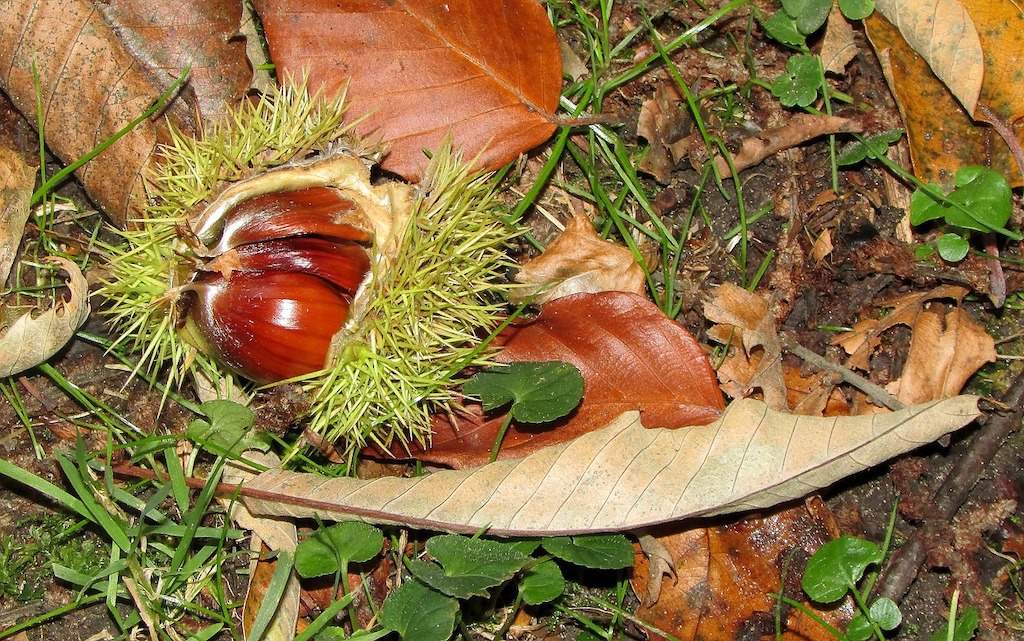
Sweet Chestnuts grow into beautiful tall trees, with elegant large, but slender leaves, with serrated margins. The leaves develop before the flowers appear in June. They form long golden-yellow catkins reminiscent of arboreal fireworks. The nuts develop in early autumn. They are protected by a very prickly outer shell (cortex). When the cortex splits it reveals two or three nutlets that are shaped like pixie-hats, with a pointed tip and tiny tuft of white hair. In natural stands, only one of the nuts develops fully.
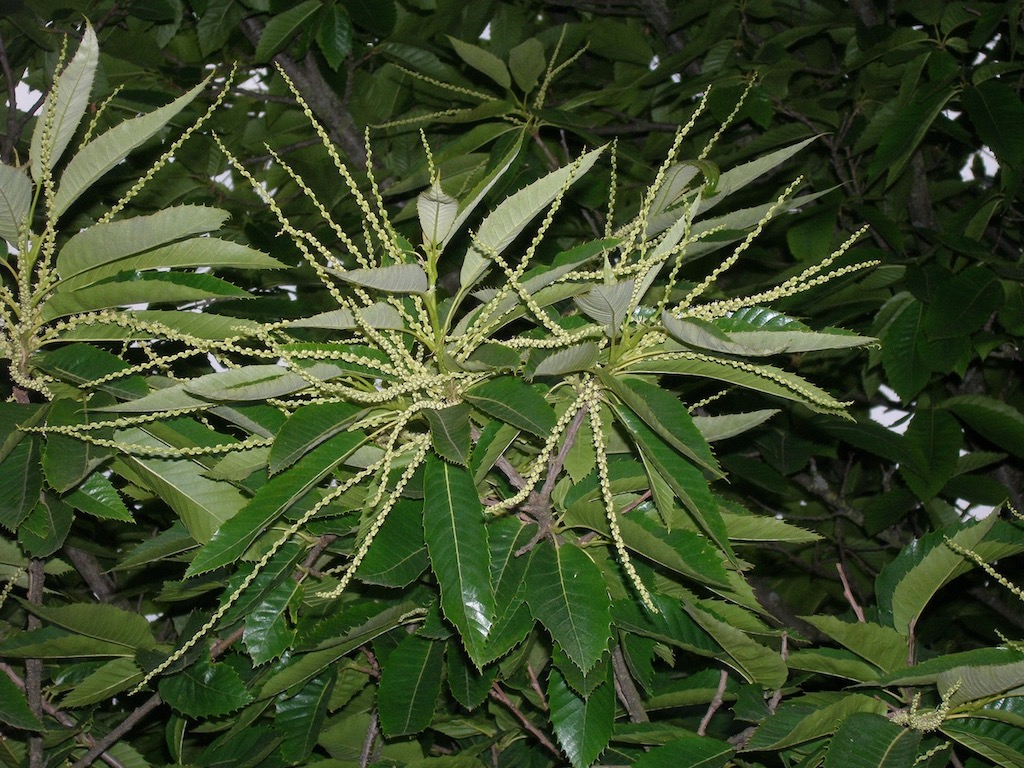
Sweet Chestnut Flowers

Commercial Chestnuts are derived from a cultivated variety, in which the underdeveloped nutlets are missing altogether. The bulk of the commercial crop is grown in Italy, Spain, Portugal, and France, where chestnuts still play an important part in the traditional cuisine.

Foraging

If you are lucky enough to have a Chestnut tree in your neighborhood, the temptation to collect the very first nuts that fall to the ground in September is almost irresistible. But the early nuts are not yet fully ripe and are usually not worth the bother. It is better to wait for another couple of weeks. By October, the nuts are plump. The outer, bristly coats should be cracked open. Now it’s time to get busy, otherwise, the forest folk, the squirrels, and wild boar will beat you to it. The shells are really prickly, so thick rubber gloves come in handy. The easiest way to remove the cortex is by gently stepping on the nuts and rolling them around on the ground underfoot until the outer shell comes off by itself. Check the nuts for little holes. That would indicate that the worms are already feasting. Worms tend to be more of a problem after heavy rains or when the nuts have been lying on the ground for too long.

The most tedious part of the Chestnut harvest is not the collection, but the shelling. A fibrous membrane adheres to each nutlet beneath the shell. It clings to every crevice and cleft.
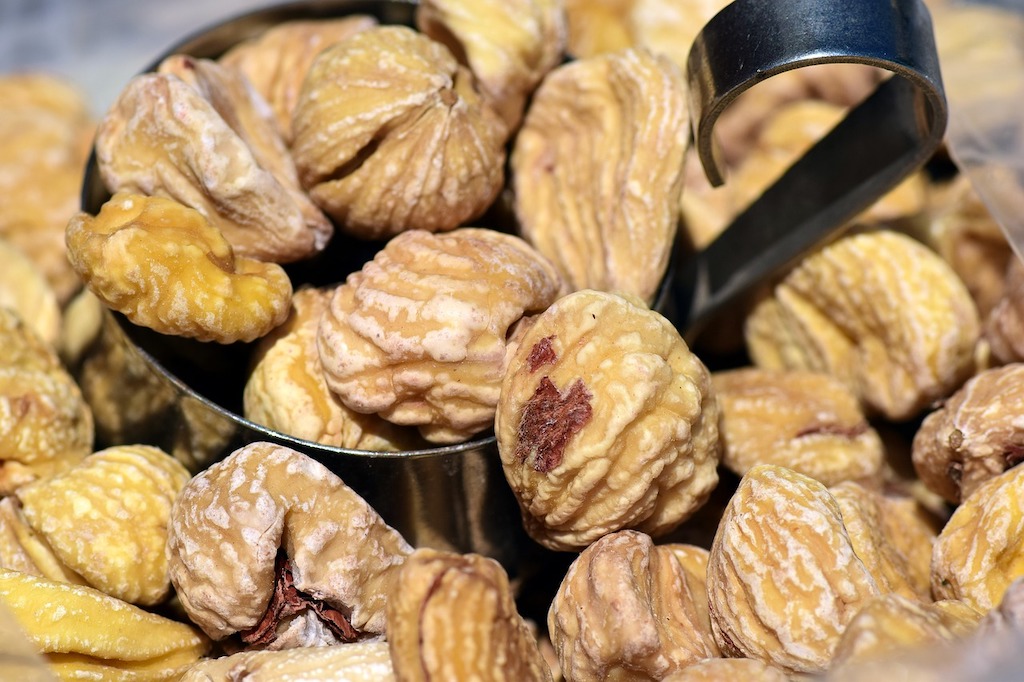
peeled chestnuts

There are several methods to remove this membrane, and the method of choice depends on how you intend to use the nuts.

But, regardless, the first step is to remove the outer husk. Cut a little cross on the bottom surface (of each nut. Without this precaution, they explode violently when being roasted. But even if you boil them, cutting the outer shell makes the process of shelling them and removing the membrane much easier.

To preserve Chestnuts for long-term storage you still need to shell them and to remove the inner membrane. Afterward, you can dry them quickly in the oven or dehydrator, to avoid mold. Once dehydrated, they need to be soaked in water prior to use. In France, a traditional method of curing the nuts was to spread them on the floor of a harvest hut and to smoke them for a period of time. Smoked nuts could be stored for up to a year.

Pan/Oven Method

Cut a cross on the flat side of each nut and place them in a heavy skillet. Add about half a teaspoon of butter per cup of chestnuts and roast at medium heat until the butter is melted. Put the pan in the oven at 475°F. After 10 - 15 minutes, remove the pan from the oven and take off the shells with a small sharp paring knife. It is a tedious process, but if done correctly, the inner skins will adhere to the outer shells, thus making the shelling process much easier.

Chestnuts are a wonderful, very nutritious wild food. Unlike most nuts, they are rich in both carbohydrates and proteins but contain very little fat and no cholesterol. This distinct composition has earned them their nicknames ‘l’arbre a pain’ in French, meaning ‘bread tree’ or the English equivalent, ‘the grain that grows on trees’. Their flavor and consistency are unique in that it lends itself very well to both sweet and savory dishes. A favorite is chestnut stuffing, but they can also be used in soups, nut loaves, cookies or desserts, or they can be ground into nut flour.

Recipes


Roasted Chestnuts

A simple and delicious way to enjoy Chestnuts is to simply roast them, either in the oven or on an open fire. In southern Europe, special chestnut roasting pans are used for this purpose, though they are not strictly necessary. They are basically frying pans that have holes on the bottom. But it is just as simple to roast the chestnuts in a regular pan. The important thing to remember is to make an incision on the bottom of each nut so that they don't explode. Place in a pan and roast over a medium flame for about 15 min. The flavor is completely transformed by the process. Even if you intend to use them for other dishes, such as soups or stuffing, roasting them prior to any further processing is highly recommended. They also taste great straight from the pan or can be served with blue cheese and wine.
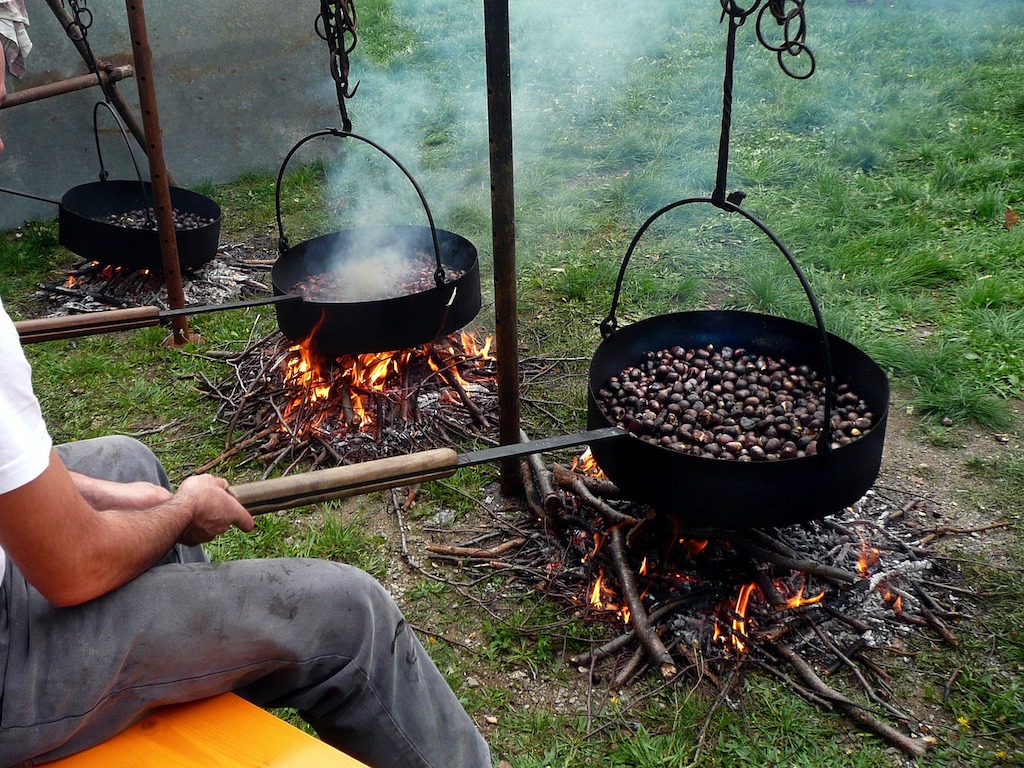
sweet chestnut roasting

Stuffing

Minced chestnuts are excellent as stuffing for birds, such as pheasants or goose. Roast onions and garlic, add boiled and minced chestnuts and rice along with chopped celery sticks and apples. Stir an egg into the mixture and season to taste, e.g. salt, thyme, sage, rosemary, mugwort. Add wholemeal flour, oats or wholemeal breadcrumbs until the mixture has the right consistency, neither too dry, nor too wet. Judge the amounts by the size of the bird.

Chestnut Loaf

The above-described stuffing can also be adjusted to make a nice chestnut loaf. The chestnuts can be mixed with other nuts, e.g. peanuts or walnuts. Mix roughly half and half nuts and rice, add grated or finely chopped vegetables, e.g. zucchinis, mushrooms, onions, and garlic either sautéed or raw, add an egg and flour until everything sticks together nicely. Season to taste. Fresh herbs such as thyme, rosemary, and a touch of sage are nice. Grease a bread pan and fill with the mixtures. Bake in the oven at about 375 degrees until a crust forms on the top and the dough no longer sticks when pricked with a wooden stick. Serve with steamed vegetables and mushroom sauce.

Glazed Chestnuts And Winter Vegetables

  • 2 large kumera (sweet potato)
  • 4 large parsnips
  • 4 small red onions, quartered
  • 12 whole garlic cloves, skin on
  • 1 tablespoon fresh rosemary leaves
  • 1 ½ cups peeled/blanched chestnuts
  • ½ cup maple syrup
  • ½ cup olive oil
  • salt, freshly ground black pepper

Cut kumara into large chunks. Cut parsnip in half lengthwise. Combine all ingredients in a baking dish; bake, uncovered in a hot oven (220°C) about 45 minutes or until the vegetables are tender and browned lightly. Turn gently halfway through cooking. Serves 6 to 8.

Curried Chestnut Soup

  • 1 large onion, finely chopped
  • 2 carrots, thinly sliced
  • 1 zucchini, chopped
  • 1 apple, grated
  • 1 cup mushrooms, sliced
  • 1 cup roasted chestnuts, minced
  • vegetable seasoning
  • ½ pint milk
  • ½ vegetable stock
  • 2 cloves garlic
  • Curry powder
  • Pinch cinnamon
  • Chilies to taste

Sauté the onions and carrots until the onions are soft. Add zucchini and apple. Continue to sauté and stir. Add mushrooms. Sprinkle 1 tablespoon of vegetable seasoning and a teaspoon of curry powder and a pinch of cinnamon into the vegetables and continue to stir. Add one pint of water. Bring to the boil and add the roasted and minced chestnuts. Stir continuously so as to avoid any of the ingredients sticking to the bottom. Press the garlic into the soup. Add 1/2 pint of vegetable stock and 1/2 pint of milk and simmer until all the vegetables are cooked. Season to taste with extra salt, coriander, cumin, and chilies. Adjust liquid level so the soup is creamy but not too thick. A tiny touch of honey can blend the flavors perfectly.

Baked Apples With Chestnut Stuffing

Roast the chestnuts as described above, shell and mince. Mix with raisins, sultanas, oats, and honey. Core the apples and fill the hole with the stuffing. Place on a cookie sheet and bake in the oven until the apples are soft. Serve with vanilla ice cream.

Chocolate Chestnut Mousse

Chestnuts combined with cocoa and amaretto make a perfect ending for a festive dinner.

  • 2 pounds of Chestnuts, peeled and cooked
  • 12 Tbs. of sugar or honey or to taste
  • 4 Tbs. of cocoa
  • 4 Tbs. of amaretto
  • 16 ounces whipping cream

Shell and peel chestnuts as described above. Boil until tender. Drain and add sugar or honey, cocoa, and Amaretto. Blend in a food processor until smooth. Beat whipping cream until stiff. Fold into the chestnut puree. Divide among dessert glasses. Chill. Decorate with whipped cream and chocolate shavings. Serves 10.

The mousse can also be used as a cake filling. Beware: it is very rich!
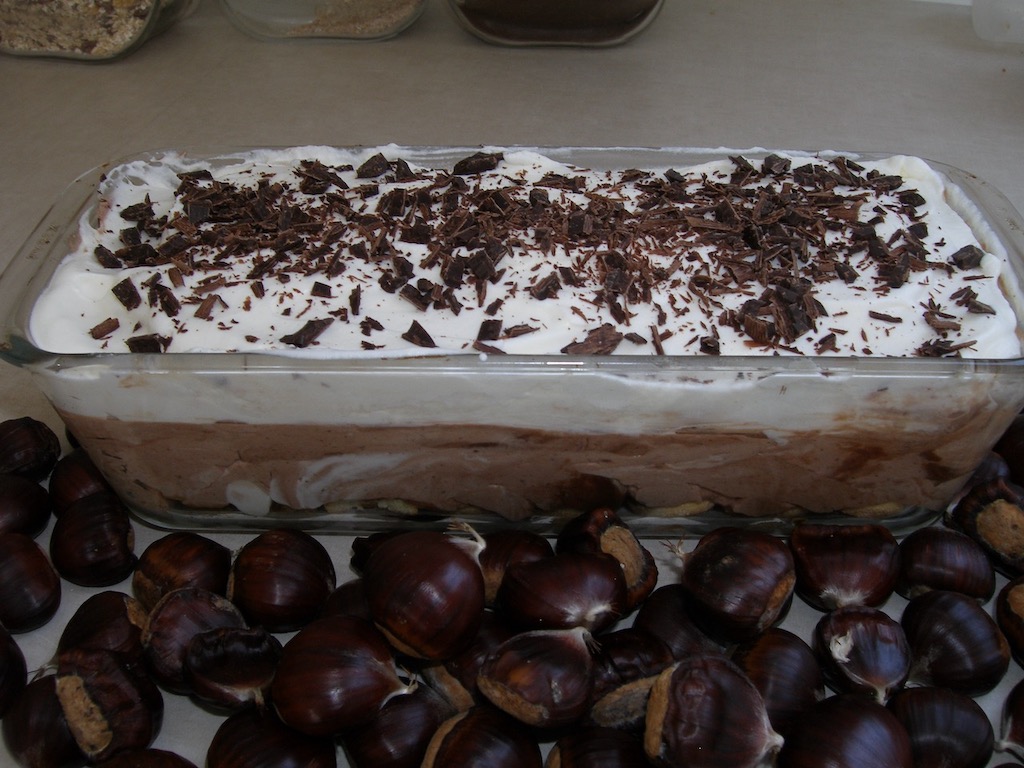
Sweet Chestnut-Cocoa Mousse

Preserving the Harvest (2)

Preserving the Harvest (2)

In the last issue, I talked about different ways to preserve food, from storing, canning, and drying to making jams and pickles. All of these methods serve to preserve food for later use to sustain the body. However, there is only so much jam and cake you can make with excess fruit.  But, hey, there is still something else you can do!

Traditionally, any excess fruit is distilled to yield fruit brandy. The Black Forest, for example, is famous for its Kirschwasser, but there are dozens of similar fruit brandies made from plums, raspberries, bilberries, pears, apples, apricots - you name it. But as home distillation is illegal in many parts of the world, we won't go into it here.

Wine-making

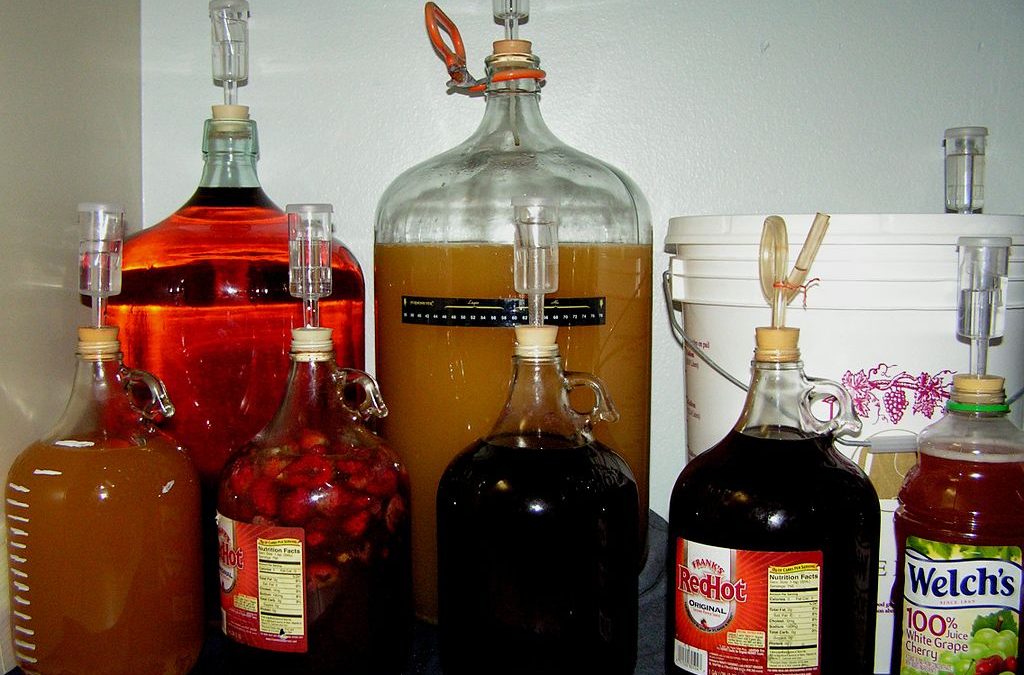
Winemaking, on the other hand, is not illegal. Wine experts may scoff at such peasant brews, fruit wines can be excellent, highly idiosyncratic, fun to make, and inexpensive. One just has to abandon any preconceived ideas of what wine should taste like. If you enjoy experimentation, winemaking opens up a whole new universe of hitherto unimagined possibilities.

The process of winemaking is simple enough. It involves the straight forward process of converting sugar to alcohol and CO2, using the 'bio-services' of yeast, which does all the work. (Sorry, wine-making is not CO2 neutral.)

There are gazillion different recipes for just about any fruit or vegetable imaginable. But grapes are considered 'ideal' in terms of the balance of acids and sugars. They require little or no adjustments. The most difficult aspect is the measuring process used to calculate the acid/sugar/ and potential alcohol content of the resulting brew. That is if you are going to get technical about it and expect to have some control over the result. Good wine does not happen by accident (although it may). When making wines with other fruits the wine-maker periodically takes a sample to measure the acid and sugar levels and makes adjustments accordingly.

Beginners often find it confusing that there is no general method that applies to all fruit. Each is considered for its own specific merits and treated accordingly. Although when just starting out one tends to want to follow a tried and tested recipe blindly, it ultimately will be to your advantage to learn about the chemistry involved so that you can make your own decisions based on your specific measurements.

Hot summers produce sweeter fruits than cold and rainy ones. Personal taste also comes into play. Some prefer a lighter, fruitier wine while others like a heavy, full-bodied one. As in all food ventures, the better the quality of the source materials you use, the better will be the result.

Basic Method:

  • Select and prepare the fruit: take off stalks, remove large stones
  • Transfer to a bucket and bruise/mash
  • Add water (the flavor would be too strong if left undiluted)
  • Add other flavoring agents, such as ginger or raisins

Many winemakers add Campden tablets at this stage for the purpose of sterilizing the brew. Others just add the yeast and allow nature to run its course. Whichever method you follow, the important thing is not to add yeast and Campden tablets at the same time as this would destroy the yeast.

After adding the yeast, leave the mixture to ferment, but cover the container. This primary fermentation usually takes approximately 3 - 7 days.

Siphon the liquid off by transferring it to a demijohn. Bung with an air-lock to prevent oxygen from entering. Fill the demijohn to the top. Check the sugar/acid content and make adjustments as needed. Let it ferment for a further 4-6 weeks.

Avoid opening the demijohn unnecessarily so as to minimize exposure to air, especially in the beginning when the alcohol content is low. But if the fermentation process slows down too soon, test and if necessary, feed it with additional sugar.

When the right alcohol/acid/sugar balance has been achieved, the liquid is siphoned off, filtered and filled into bottles. After 6 months to 1 year, the wine will be good to drink.

Winemaking is not complicated. But if you want really good results you have to invest in a range of tools and equipment and learn how to use them. You also need enough room to store the materials and the demijohns. But the satisfaction and sense of discovery derived from it are absolutely worth the effort. Just don't expect your wine made from Bananas to taste like a Chardonnay. And, be patient!

It would go far beyond the scope of this article to describe all the tools that are necessary to get started or the additives that may improve the quality of your wine. Join a wine-making forum to discuss your projects and learn from others who are also practicing this fine art. Below are some links to pertinent pages and forums:

Liqueurs

This kind of sweet, alcoholic 'dessert' is easy to make and quite delicious. Macerate the fruit or herbs in a strong alcohol base such as Vodka, for several weeks. Remove the fruit and add sugar or spiced sugar syrup. Fill into glass jars and allow to stand for several months more - the longer you leave them the better they get.

Rumtopf

This is a great way to preserve excess amounts of fruit. And what sweet memories it of the summer past it will bring with when you dig into it in the winter.

Rumtopf consists of fruit, sugar, and rum. It is basically a collection of seasonal fruit preserved in and macerated in sugar and alcohol. Traditionally, it is started with the first soft fruit of the year - usually strawberries. Remove the green bits but keep the fruits as 'whole' as possible. Place a layer of fruit into the rumtopf (a tall earthenware pot), then cover it with a layer of sugar (equal amount in weight). Finally, add rum to cover the fruit with about 1inch of alcohol. Place the lid on top and leave in a cool, dark place. Every month a new fruit is added following the same procedure. Strawberries, cherries, currants, gooseberries, raspberries, peaches, plums, apples, pears - whatever you fancy. Most people prefer to make a batch for red fruit and a separate batch for yellow fruit or use red fruits only. By Winter Solstice you will have a lovely jug full of highly potent fruit that makes a very warming condiment for ice cream or other desserts.

Elderberry wine

  • 3 lbs fresh elderberries
  • 3 lbs sugar
  • 8 pints of water
  • 1 teaspoon citric acid
  • Wine yeast

Clean and strip the Elderberries from the bracteoles (can be done with a fork) and remove all green parts. Place in a bucket and bruise the berries to release the juice. Boil the water and pour half of it over the berries. Set aside until cool. Dissolve the sugar in the rest of the boiling water and strain the berries through a sieve on to the sugar. Add the lemon juice and the yeast (the liquid should be warm, but not hot). Pour the liquid into a demijohn and seal with an airlock.

Keep the wine in a warm place and allow the fermentation to run its course. When the bubbling has ceased, siphon the wine into a clean jar, a process that winemakers call ‘racking’. This is done to remove any sedimentation (known as ‘lees'). Store the demijohn in a cool place and rack intermittently until no more sediments form. When the fermentation has ceased completely, there are no more sediments and the specific gravity is 1000 or less, the wine is ready for bottling.

Green Walnut Liqueur

  • 750 ml fruit brandy
  • 500g brown sugar
  • 1 Vanilla bean
  • 3 inches of crushed Cinnamon stick
  • 3-5 star anise, roughly crushed

Pick about 30 green walnuts (traditionally on St. John's Day / 24 June) while they are still soft. Cut into slices and place them into a wide-mouthed jar. Pour 750ml of fruit brandy, or eau de vie over the nuts and macerate for 4-6 weeks. Strain and discard the nuts. Prepare a syrup with 500g of brown sugar and 500ml water. Scrape the inside of the Vanilla bean, and add to the syrup along with the crushed Cinnamon and the Star Anise. Simmer for 5 minutes. Stir in 1 teaspoon of Cocoa powder and the juice and zest of 1 organic orange. Set aside to cool, then mix with the walnut filtrate and fill into jars (Kilner jars). Allow macerating for at least 3 months. Filter and bottle.

Climate Change – what can we do?

Climate Change – what can we do?

"The climate emergency is THE defining issue of our times."

It is the beginning of August, the time of ripening fruits. The year is progressing rapidly and the sun is already past its peak. It has been a stormy first half of the year with weather extremes throughout the world. Temperatures nearing 40°C which in my neck of the woods is unheard of, especially this early in the season. July and August can always bring swelteringly hot days, but this appears to be a new kind of normal. We urgently need to rethink the squandering of our planetary resources and what can be done to address this burning issue.


Climate Grief


As the intensifying seriousness of the situation is burning into my skin I find myself cycling through the stages of grief. Denial is no longer possible. Some days, I am overcome with grief and inconsolable sadness. I long for a state of reliable normalcy but know in my heart that nostalgia is futile.


Some days, I am almost numb with shock and disbelief. The seemingly wilful destruction of our beloved home planet is simply incomprehensible.


Some days, I just get angry as hell.


But, deep within me, there is still a beacon of reason reminding me that these feelings are the drivers of change, that the way forward starts exactly right here, where I stand. All I have to do is to take a step outside of the 'normal' complacency of my comfort zone. All I have to do is to challenge myself with questions about the changes I want to see in the world. What can I do to make a difference in my own life and in my immediate social surroundings?  Such questions empower me and transform sadness, frustration, and anger into determination - powerful energy for change.


We each are the ‘gardeners’ of our worlds and choose, at each step of the way, the seeds we want to grow and that there will be to harvest when the season comes. Instead of just concerning ourselves with fulfilling only the short-term demands or temptations, perhaps it would be a good idea to take the long-range view and ask ourselves that crucial question: how do we want to shape the world? What will be the fruits of our action or inaction? What will we harvest, when the time comes? And what kind of environment and seed store will we leave for our children and children’s children?


Our time here on this planet is short but our effect on the lives of future generations is huge.

In Norse mythology, Mid-summer inaugurates the time when the fiery God Lugh takes over from the bouncy Bel.


Bel warms the earth and quickens the seeds, Lugh ripens the corn and sweetens the fruits. But Lugh can also bring almighty thunderstorms and heavy monsoon-like rains. In recent years these phenomena are spinning out of control at alarming rates.

To be sure, even in the past, August could bring short but intense rains that refreshed the land. Maybe even an occasional hail storm, which farmers feared, but rarely did it bring complete devastation. Nowadays, hail comes in the shape of ping-pong balls, destroying crops in a matter of minutes. The amount of rain that normally falls over the course of a month now often deluges towns in just a few hours. Cities are flooded and little streams turn into raging rivers at very short notice. New weather records are broken every year. We can’t deny it - climate change is here.


We have seen it coming, yet few have been ready and willing to act. People are looking for guidance from authorities, but that is in short supply. Given that politicians are in office for only a short period of time, their priorities lie with short-term goals. Bureaucracy is slow to change and unpopular messages reduce the chances of being re-elected. Fear may help to sell even the most unpopular draconian policies, but it is not a useful tool for attracting votes.


People want simple answers to our woes. Unfortunately, there are no simple answers to climate change. It is a hugely complex and new phenomenon that we are only just beginning to understand fully.


It seems, without guidance from ‘above,’ we must find ways to help ourselves.


So, what can we do?


Perhaps it is time to reflect on what has helped us to get this far on our evolutionary journey.


Human beings are nothing if not curious and what has helped us the most is our keen sense of observation and experimentation. Observing the phenomena that are happening around us and paying close attention to what works and what does not. The task seems daunting. There are so many fires, so many issues that are screaming for attention. Whole ecosystems are affected by the changes that are taking place. How can we possibly address them all at once?

The world around us is a system. Whatever we do, the effects are never isolated but will affect the whole. The crucial aspect to realize is that WE ARE ALSO A PART OF THAT SYSTEM! Therefore, whatever we do in the world out there also has repercussions on US.

That realization can be even more depressing. But it shouldn't be, because it also is the key! It is the key to understanding that we must start with ourselves and all that we do. We may not be able to fix the whole world by ourselves, but we can each fix our own world by taking responsibility for our lives and our actions. We can start by reflecting on how our own habits affect the world and make changes to minimize that impact

Some habits and practices are harder to change than others, but we each can start somewhere! 

There are things that we can do

  1. Organize
    The most important thing all of us need to do right now is to bring climate change into the conversation. If possible, group together with friends, family, and your community specifically to discuss how you have been affected and what, as a group, you may be able to do about it. A group can always achieve more than any one individual. Skills, know-how, and tools can be sourced and shared. Instead of feeling like a lone soldier fighting a losing battle you can tackle issues together, support each other and empower one another in doing so.
     
  2. Plant trees
    Encourage your community to plant more trees, and if you have the means and space, plant some yourself. According to a recent report, trees are the single most effective way to combat the rise of CO2. Even communities in poor countries, such as Ethiopia and India, have embarked on massive tree-planting campaigns. They are literally planting MILLIONS of trees. To optimize such an effort it makes sense to plant a variety of species and not just one fast-growing type. Diversity will build resilience as different trees react differently to various climate conditions.

Trees not only function as massive CO2 sinks, but they also create shade for other, more sensitive species, and help to conserve water by creating shade. Trees are also a vital component in the water cycle that regulates our climate. They are absolutely key to almost any ecosystem. They clean the air and produce oxygen, which we all need to breathe. Air pollution is currently one of the biggest environmental health hazards, according to a WHO report. It claims the lives of some 4.2 million people each year.

Extra kudos if you can plant trees with edible fruits and nuts that can provide food for people and wildlife.

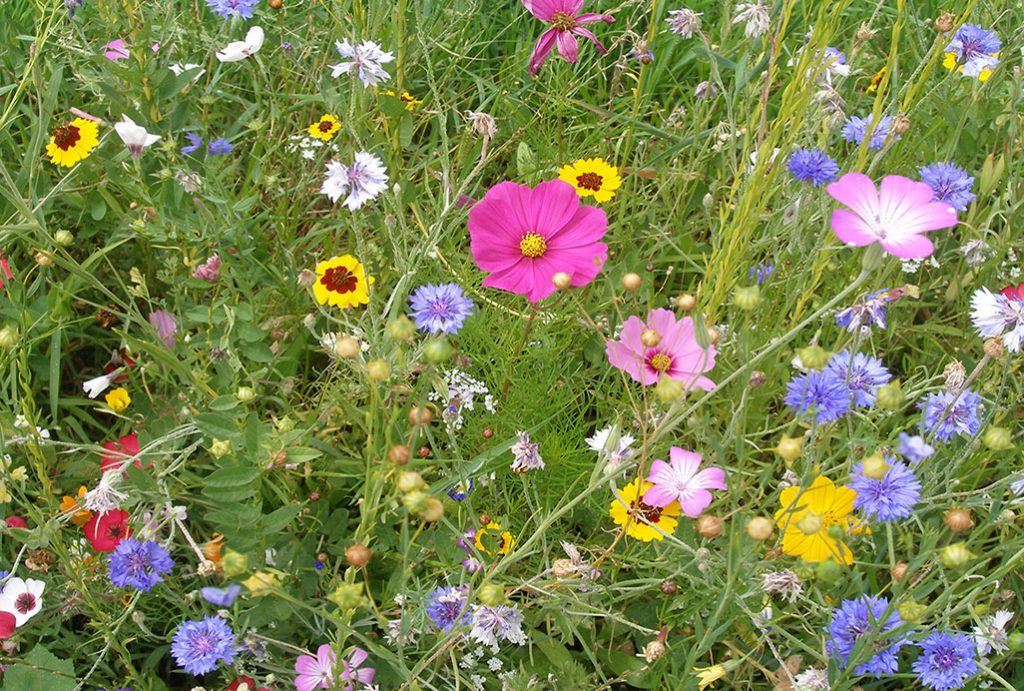
wild flower meadow

  • Conserve water
    A lot of water is simply wasted - not just on sometimes obsessive hygiene routines but also because it just gets drained into the canalization. In places where the water system is not well developed, some of it may drain directly into streams or rivers, adding to the pollution.


Most people won’t have the opportunity to build a compost toilet in their back yards or find ways to easily separate grey water from solid waste. However, you may be able to save some greywater from the sink and ‘donate’ it right to your garden. But, make sure that you are using biodegradable detergents, otherwise, the toxic substances can build up in the soil.

An easier way to conserve water is to collect it from the drain pipe. Instead of letting it wash down the drain, divert it into a tank or water barrel to be used for watering the garden. Make sure the container is covered, otherwise you will provide a breeding ground for mosquitoes.

Gardens are notoriously thirsty. This is especially true of lawns and vegetables. A good way to help conserve water is to mulch your veggies. Irrigating plants with a slow trickle watering system may also work well. Take a container (some people use plastic bottles but un-fired earthenware is better) and puncture several times to make some small holes. Dig a hole in the veggie plot and submerge the container so that it is level with the ground, fill it up with water and cover with a stopper. That way water continuously seeps into the ground. If your garden is large and you can dig in several such containers this is a good way to reduce the time and effort it takes to water.

Another good way to save water is to abandon the idea of a perfectly manicured English lawn. Instead, aim at a perfect wildflower meadow or plant more fruit trees or veggies. Or consider replacing your water thirsty turf with a more water conservative variety,  which is now offered at garden stores (e.g. Bluestem Enviro-Turf). Fleur de lawn includes low growing herb species such as white clover that fixes nitrogen in the soil and provides nectar for bees.


  • Composting
    The earth is covered by a thin layer of fertile soil. Due to erosion, this layer is continuously reduced. Farmers have to add tons of fertilizer, most of it inorganic, in order to sustain their yields. Heavy machinery further destroys the soil structure and compacts the soil. The negative effects of this type of farming practice are cumulative and turn into a vicious cycle. The only way to break this downward spiral is to change the way we look at the soil.


We derisively call it dirt and regard it as a rather lowly element. Yet, even a couple of handfuls of soil contain more micro-organisms than there are humans on earth. The soil is alive and constantly working to make this planet habitable for ‘higher’ species. The micro-organisms do this by breaking down organic materials that plants can assimilate. They also aerate the soil so that rain can penetrate the deeper layers instead of just running off the hard, impenetrable surface. But micro-organisms need one thing to do their job:  organic material on which they can work their transformative magic.

This is where compost comes into the picture. Compost is what your organic waste turns into when it is broken down by worms and other creatures that live in the soil. Some may think that composting is gross. But what is truly gross is to dump organic and inorganic waste all together into a bin which eventually ends up as toxic sludge in a landfill. By composting your organic materials and using it in your garden you will actually improve the fertility and soil structure of your plot, which not only helps it to retain more moisture but will also make your veggies more nutritious.


There are many other measures we can take to make a difference. Some may need a bit of organizational effort: carpooling for school or shopping runs, or forming buyers co-ops so as to make high quality, organic foods more easily and more cheaply available in low-income neighborhoods. Others may require an investment that will actually save money over time. such as exchanging energy-hungry appliances for more efficient ones or installing solar panels or wind power generators.


The climate emergency is THE defining issue of our time. It does seem daunting - almost too big to even contemplate. But once we stop to think about our own behaviors and habits and what we individually can do to make a difference, we realize that many little steps can eventually bring about the change we so desperately want and need.


Collectively changing our consumer habits and voting with our conscience will eventually ring the bell at the government level. We must make it clear that we do not want to go down the road of certain planetary destruction. In democratic countries, governments depend on our approval and cooperation - and that is where our power lies.


Plant Profile: Corn (Zea Maize)

Plant Profile: Corn (Zea Maize)

Corn or Maize, the 'staff of life' of the Americas, hardly needs much of a description. Every child recognizes it and it is cultivated so abundantly that it can hardly be overlooked. What few people know, though, is that Corn is just an overambitious grass.

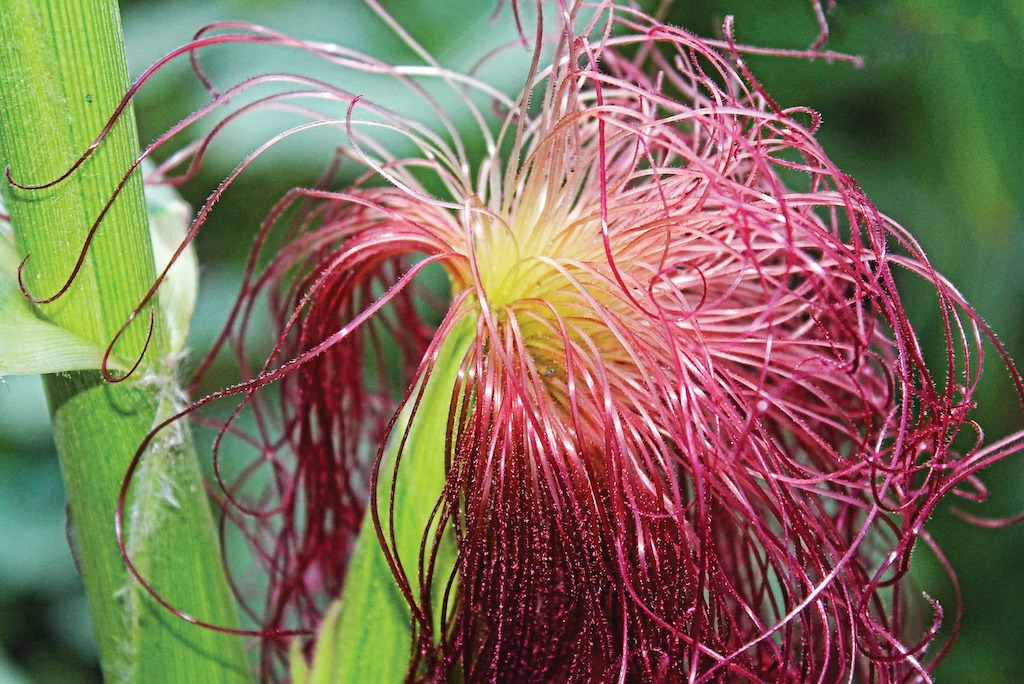
Corn is a giant among grasses. It can grow more than 2m high and covers vast stretches of land dominating rural landscapes. The sturdy, fibrous stalk with its characteristic broad angularly bent-over leaves is a familiar sight. The ears develop in the leaf axils. But they are so well covered by the outer sheathing (husks) that they can barely be seen, were it not for the tuft of 'hair', known as corn silk that protrudes from the top of the cobs.

Modern corn was first domesticated in Mexico. It is one of the earliest domesticated plants from the New World. Its wild genetic parents are two species of Teosinte (http://en.wikipedia.org/wiki/Teosinte). Today, at least five species of Teosinte exist, but it is not clear whether any of them has been a direct ancestor of our modern corn, or whether the original parent variety has since become extinct.

Although Teosinte resembles modern corn in many ways the differences between wild and domesticated species are quite distinct. Most notably, Teosinte's cobs are tiny. Its seeds are hard and covered by a tough skin. When ripe, their ears break off and the seeds are released.

Domesticated corn has been bred to hold on to the ears and not to release its seeds voluntarily. In the process, modern domesticated corn has become entirely dependent on humans to sow their seeds. We don’t know exactly when corn first began to morph into the shape and size we know today, but the process must have started a very long time ago. The oldest archaeological record for domesticated corn comes from Guilá Naquitz Cave, near Mitla, which is located in the Valley of Oaxaca, Mexico. It is approximately 6250 years old.

Surprisingly, corn appears to have been known in Asia for much longer than is commonly assumed. It was long assumed that prior to Columbus there was no contact between the Old World and the New. Yet, archaeological findings from southern India and China that feature corn and other New World plants, seems to prove this theory wrong. Carl L. Johannessen stumbled across some very precise carvings at temples in the Karnataka region of India, which were built during the Hoysala Dynasty, between the 10th and 13th centuries.

Carl L. Johannessen and Anne Z. Parker, "Maize Ears Sculptured in 12th and 13th Century A.D. India as Indicators of Pre-Columbian Diffusion," Economic Botany 43 , 1989, 164-80, argue that stone carvings of maize ears exist in at least three pre-Columbian Hoysala stone block temples near Mysore, Karnataka state, India.

Their article provides 16 photographs that show a few of the sculptures in question.https://www.asc.ohio-state.edu/mcculloch.2/arch/maize.html. The carvings are quite remarkably accurate. Not just one but many distinctive features of maize are represented as true to life as a record cast in stone. Yet, many scholars have found it difficult to accept the idea of pre-Columbian contact and have thus come up with their own alternative interpretations of these sculptures. None of them seems terribly convincing.

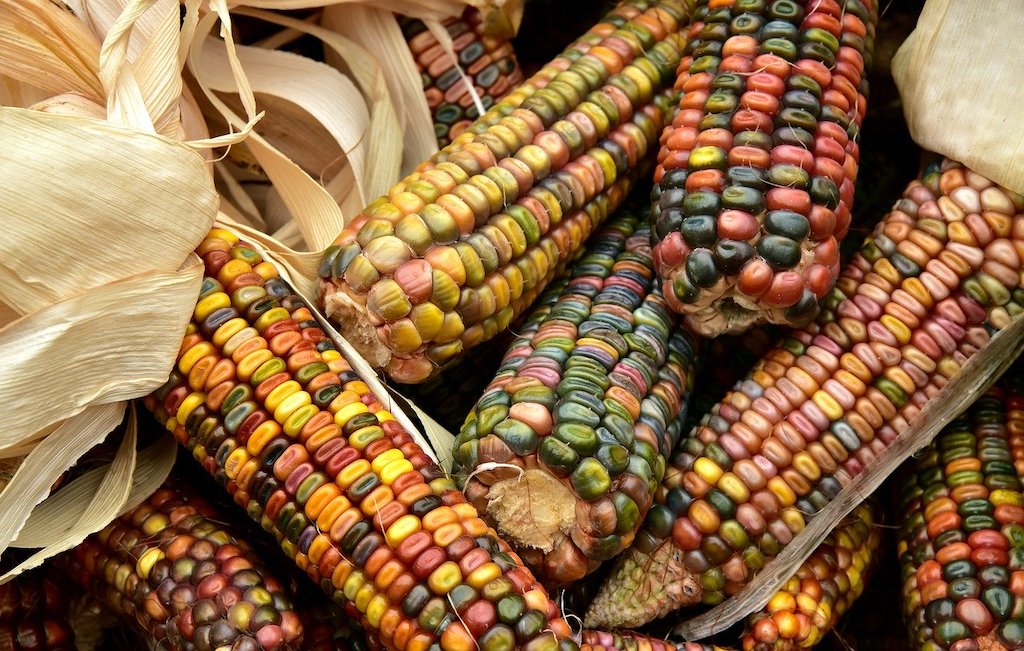
Corn hybridizes quite freely and innumerable varieties have been created since it was first domesticated. Today, corn comes in all shapes, sizes, colors, and textures: some predominantly starchy varieties, some soft, some hard, some sweet, some long, some short and round, some with large kernels, others with tiny ones, some blue, some white, some yellow or red and even glassy, multi-colored ones exist.

The variety appears sheer endless, yet only about five basic types of corn exist. The rest are variations of these basic types.

DENT CORN

The cobs of this type of corn are white to yellow. It is called ‘dented’ because the kernels become indented as the cob matures. This is the most commonly cultivated species as it is very versatile. Dent corn is used to produce oil, cereals, and flour, as well as animal feed. it is rich in cellulose which can be used to make biodegradable plastics and absorbent material for toiletries such as diapers, while the oil is used in cosmetics, soaps, skincare products, and more.

FLINT CORN

The cobs come in all colors and they shrink as they dry. This type of corn has very hard kernels and is used for similar purposes as Dent corn.

POPCORN

This type of corn is characterized by a hard outer skin and a soft, starchy center. This combination gives it its unique ‘pop-ability’.

SWEET or VEGETABLE CORN

This is everybody’s favorite type of corn. As the name suggests, it is high in sugar and deliciously succulent. It is the well-known 'corn on the cob' variety. Most of the carbohydrates in this type come in the form of sugars, which make it so tasty and sweet. It is best enjoyed fresh, as the sugars turn into starch if it is stored for too long.

WAXY CORN

This type of corn has starchy cobs with a waxy appearance. It is mainly used in the Far East for its tapioca-like starch. The food industry makes use of its stabilizing and thickening properties and as an emulsifier, e.g. for salad dressings. Other industrial uses include remoistening adhesives for gummed tape, in adhesives, and in the paper industry and as animal feed.

New varieties of corn are continuously bred. But today, these are born in the test tubes of biotech labs. Such modern cobs are not just hybrids but bio-engineered functional plant agents, designed to produce phytohormones and other substances of value to the pharmaceutical industry.

This type of enterprise is inherently dangerous as there is no way to protect people from inadvertently consuming this type of product. The germplasms of edible and bio-engineers varieties are kept in the same storage vaults, which risks accidental mixing. The germ-plasm bank for corn in Mexico has already been contaminated with genetically altered material. And time and again there are reports of non-approved, gene-manipulated types of corn that have entered the human food chain, often in the form of harmless-looking tortilla chips. These can cause severe and dangerous 'allergic' reactions in humans.

Corn is also at the center of another controversy: a considerable amount of corn is used to make ethanol as a bio-fuel. While we urgently need to find more environmentally friendly sustainable biofuel alternatives, we must also realize that they have their own environmental problems. Previously uncultivated land or even forest is turned over to agricultural production to fuel our cars.

In the course of its domestication, Corn has adapted so well to our human needs that it has given up its ability to reproduce independently. Natural fertilization still occurs, but corn depends on humans for all its nurture and care.

NIACIN DEFICIENCY AND NIXTAMALIZATION

Corn is very nutritious and supplies about 20% of the world's food calories. However, a diet that is completely dominated by corn and corn products is deficient in niacin (vitamin B3). Niacin deficiency can result in serious physical health problems due to niacin deficiency. The condition is known as 'Pellagra', which is characterized by the '3 D's' - diarrhea, dermatitis, and dementia (some say 4 D's and add 'death').

Interestingly, the lack of niacin in corn can be corrected by treating it with lye - a common practice among Native Americans. Such treatment results in a corn product known as hominy or Nixtamal. The process itself is referred to as nixtamalization (from the Nahuatl word 'nixtamalli', meaning 'unformed corn dough’). This forms the basis of many corn products such as tamales, corn tortillas, and masa. The process removes the pericarp or outer skin of the kernel.

The process of nixtamalization also increases the bio-available amount of calcium by 75% - 85%, making it more easily digestible. Other minerals, such as iron, copper, and zinc are also increased. Nixtamalization also counteracts certain mycotoxins present in untreated corn. Fermentation of nixtamalized corn produces even more benefits: increased levels of riboflavin, protein, and niacin in addition to amino acids, such as tryptophan and lysine.

Unfortunately, the purpose of this alchemy was completely lost on the Spaniards, who took some corn back with them to Europe. They also introduced it to Africa, where it soon became an important food crop. However, the people who came to rely on it, but did not have the traditional knowledge to guide their use, soon became sick with pellagra symptoms. The importance of minerals and vitamins had yet to be discovered, so corn soon was eyed with suspicion. It earned a reputation as a poor man's food that would prevent starvation, but it was not considered wholesome.

CREATION MYTHS

Native Americans of course continued to thrive on it. It is their most important staple food and it is closely tied to all kinds of spiritual traditions and practices.Throughout the Americas, corn is closely associated with various creation myths. According to theses myths it was the Corn God or Goddess him or herself who taught the people how to grow and prepare corn so it may sustain them.

The Mayans revered this God as Yam Kaax, described in the Popol Vuh, the Sacred Book of the Mayans. Corn is linked to the very genesis of creation itself, for when the Gods decided to shape the world, they made different kinds of corn brew, which were to provide vigor and substance to their creation. They formed the first man and the first woman from white and yellow corn masa, which they transmuted into human flesh and blood.

And so it is to this day - corn is part of every meal, whether as tortillas tamales or hominy or one or another type of brew. The Aztecs mixed corn starch and cocoa to make a brew known as 'Atole', a kind of original 'hot chocolate’. However, this did not taste much like what we have enjoy as such. It was mixed with various spices including vanilla and chili. An alcoholic brew made from corn is known as ‘Chicha'. Originally, it was used as sacred brew for ritual purposes, but now it is served at any and all occasions, especially during fiestas.

According to a Peruvian story, only two men survived the primordial deluge. They learned about corn from the 'Macaw Women'. Every day, when they returned home at night, they found a large vessel filled with Chicha in their house. This went on for some days until one day, one of the men decided to stay at home to watch and see who brought them the mysterious brew.

Soon after the other man had left, two red Macaws flew in, took off their feathers and revealed their female bodies, one an old hag, the other a young girl. At once they started to chew some corn and spitting it into the pot. Finally, they filled it with water. This describes the traditional method of preparing Chicha. The man, being the possessive type, jumped from his hiding place and grabbed one of the women by the hair - of course he caught the young one, while the old woman fled. Thus, he came into possession not only of the first corn seeds, which he duly planted, but also of a wife.

In Peru, corn was associated with the Sun, which in this myth are personified as solar Goddesses. Chicha thus represents the essence of the sun's magical powers.

In the Americas, Corn silk, the familiar tassel of 'hair' at the end of the cob, was considered a valuable medicine. It is believed to support the organs of the lower abdomen and was used to treat a variety of conditions: constipation, diarrhea, urinary retention, bladder infection, as well as infertility, and menstrual pains. It was also used to tone the womb after childbirth.

Although cornsilk is not 'official' in most of today's pharmacopoeias, except in China, herbalists still use it to cleanse the urinary system, and to flush out kidney and bladder sand and gravel. Corn silk is considered a cleansing herb, that can eliminate toxins and thus purify the blood. Thanks to its diuretic effect it can also reduce an elevated blood pressure.

The Mayans considered their sacred plant a medicinal food - when suffering from severe illness they would eliminate all other foods from the diet and let corn alone nurture the person back to health. Mythology becomes reality - the corn reconstituted the patient’s flesh and blood just as in the ancient origin myth.

corn silk

Medicinal Uses:

Part used: Corn Silk, the silky 'hair' at the end of and surrounding the cob.

Constituents: allantoin, sterols, saponins, hordenine, plant acids, Vitamins C and K

Action: diuretic, demulcent, tonic,

Indications:

Corn silk is a valuable remedy, both, by itself or as an adjunct to other herbs. It can be used to treat afflictions of the genitourinary system. It is particularly helpful when it comes to alleviating the stinging pain of cystitis. The diuretic action also helps to flush out small urinary gravel and sand. In conditions such as prostatitis, it relieves fluid retention and reduces the frequent urge to urinate. The diuretic effect also lowers the blood pressure.

Native Americans have also used it to treat infertility and menstrual pain. Applied externally, the fresh corn silk can be used to clean wounds. For bacterial bladder infections it is best used in conjunction with an antiseptic herb, such as Uva Ursi or Boldo leaves. Cornsilk also seems to have an indirect effect on the liver, as it increases the flow of bile. This may explain the  traditional indigenous use of this herb in the treatment of gallbladder stones. Increased bile flow also improves digestion and absorption of nutrients from the intestines.

Corn Recipes

Green Chili Corn Bread

  • 1 cup of buttermilk
  • ½ teaspoon of baking soda
  • 2 teaspoons of baking powder
  • 2 eggs, well beaten
  • ¼ cup of flour
  • 1 cup of yellow corn meal
  • ¼ cup of vegetable oil
  • 1 medium onion, chopped
  • 4-ounce can of chopped green chillies (or fresh)
  • 1/2 cup of Cheddar cheese, shredded
  • 8-ounce can of creamed corn

Mix all together. Pour into well-greased 9 x 9 inch pan. Bake at 350ºF. for 1 hour.

Blue Corn Dumplings

  • 1 cup Juniper Ash Water -- (See below)
  • 3 ½ cups Water
  • 6 cups Blue Corn Meal
  • Salt to taste

Boil the water.

Add the juniper water and salt.

Add corn meal and knead until soft.

Shape into small balls and drop into the boiling water. Cook for about 15-20 minutes. Remove and drain.

Serving Ideas : good with stews and hearty soups.

The Hopi form round dumplings in the winter and flat ones in the summer to ward off bad weather.

Juniper Ash Water

  • 2 tablespoons Juniper Ash
  • 1 cup Water

Snip off the tips of several juniper twigs and place them on a fine meshed metal screen. The twigs should not be woody. Light the twigs and let the ash settle on the screen. With a fine brush, (broom grass), carefully sift the ash though the screen. Store in an air tight container until needed.

To make juniper water, boil the water, remove from heat and add the ash. Steep 10-15 minutes, strain. Only make as much as is needed immediately, as it does not keep.