Nature Notes:
Autumn Equinox
Happy Autumn Equinox!
On the Autumn Equinox, night and day are equal. Light and dark are in perfect balance. The Equinox marks the beginning of the end of the harvest season. We celebrate the gifts of the Earth and give thanks. In the Northern Hemisphere, the life-force begins its slow decline as it retreats into the subterranean realm of Hades. The days are getting shorter and cooler; summer is over. We celebrate the joys of the summer and are grateful for the harvest blessings.
The end of the summer is often intensely busy with hunting for nuts and mushrooms, preserving the gifts of the Earth and preparing for the coming dark season.
Stock up the larder and gather the supplies you need to see you through the winter.
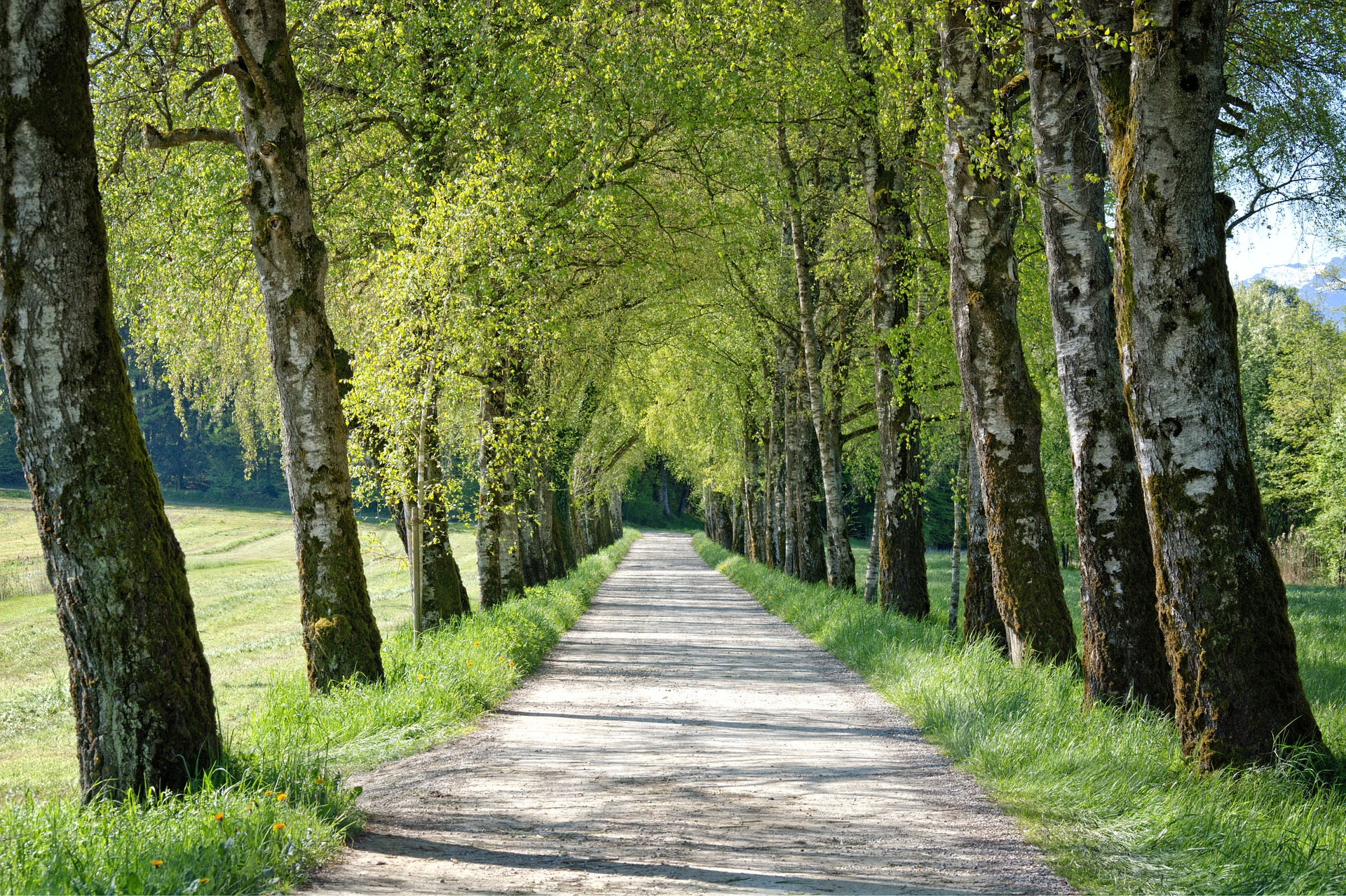
Returning to work, we concentrate and focus on our projects and goals. But don't forget to enjoy the pleasures of this in-between season, as nature explodes its dazzling display of autumn colours.
Image by Sabrina Ripke from Pixabay
Current issue
Gardening Jobs in February
What kind of gardening jobs can there possibly be in February?
In the middle of February, I itch to get back into gardening. Granted, it's early days, and there isn't that much to do - but there is always something, even as early as February.∗
It is still winter, and the weather has been pretty wild and stormy, but I have spotted the first snowdrops, and even the first Winter Aconite is out! They are such a welcome sight - tentative signs that spring is on its way. Even though temperatures are far from balmy, Mother Earth is stirring...
It's a botanical wake-up call. Suddenly, I feel restless, itching to do some gardening. But where to start, and what to do?
Indoor Gardening
Start some long-season plants indoors
I live in climate zone 7/8, so in February, gardening starts indoors. My house turns into a potting shed. I am not suggesting you should do the same. Maybe you are better organised. Perhaps you have a greenhouse or a heated cold frame where you can start the earliest seeds, protected from the cold.
If you live in northern latitudes, the growing season is limited. But you can extend it as far as possible by starting long-season plants, like chilli peppers or aubergines, in February indoors.
All you need are some starter trays and sterile starter soil that is not too nutrient-rich. It needs to be sterile so that your tender seedlings won't have to compete for nutrients against random weeds whose seeds are lurking in the soil. This is especially important for slow-germinating seeds. Garden centres and DIY stores sell trays and starter soil, or you can make your own.
DIY seed trays
Those fancy seed trays make things a little easier: they often come with a clear plastic lid to prevent the moisture from evaporating. Sometimes, they even have a mechanism to open them without having to take the lid off. But you don’t really need that fancy stuff. It is easy to improvise by recycling your yoghurt pots, other plastic containers, or even empty milk cartons.
The right time
Here are the rules:
- Start warmth-loving, long-season plants 8-10 weeks before the last expected frost in your area.
- Water the seeds regularly with a watering sprayer to keep the soil moist, and if you use the DIY trays, cover them with cling film.
- Place the starter trays in a bright, warm spot, and you should see the first seedlings pop up after 7-10 days, on average.
- Don't let the seedlings dry out! That would kill them!
- Once all danger of frost has passed and soil temperatures have risen to about 15 °C/60 °F, you can begin hardening off your ‘babies’ before you transfer them to their permanent spots.
- Harden off the plants by placing them outside during warm days and covering them at night.
--------------------------------------------------------------------
At least, this applies to those in the Northern Hemisphere who live in growing zones 7-8. Every climate zone is different, and you may have a microclimate, so take this as general guidelines - there are no guarantees.
You might also be interested in:
How to plan a garden
Before you plant anything, try to really understand your garden.
Topiaria Gaudium
There is a strange fever going around. Strangely, it only affects gardeners: ‘Topiaria Gaudium Fever’. It is a special condition marked by high levels of excitement caused by the anticipation of the new gardening season.
What to Sow in January
Here are some veggies you can sow (indoors or under glass) at the end of January (about 4 weeks before the last expected frost):
Outdoor Gardening Jobs
Once the snow has melted and the soil has dried off, it is time to get busy and prepare the beds.
Loosen the soil and get rid of any invasive weeds. (Some may well be edible!) Mix in some fresh compost. Beds that won't be used immediately should be mulched. Let the soil settle until the temperatures are high enough to transfer your first seedlings or sow directly into the prepared bed.
Sowing directly into the soil
Sow hardy crops, such as peas, early varieties of radish, parsley, spinach, carrots, lettuce, and onion sets directly into the soil. If you are worried about late frosts, start them in a cold frame and wait to transfer them until the soil has warmed to about 15 °C.
Carrots and parsley can be slow to sprout. You can start them in a dish of wet sand. Leave the dish in the cold for about a week, then take it indoors, and you should see your carrots sprout quickly. Carrots and root parsley like loose and even soil. Prepare their permanent spot well. Mix sand and garden soil and sift them together to create light soil.
Potatoes
Towards the end of February, you can start 'chitting' your spuds. For best results, use seed potatoes. Lay them out in egg cartons and put them in a sunny spot on the windowsill, with the side with the most 'eyes' facing up. Let them sprout for 5-6 weeks before planting them out.
Wait until early March or April, before sowing less hardy crops.
To avoid all your plants being ready for harvest at once, you can sow successively with a 10-day interval for a longer season.
Happy gardening!
Check out SeedsNow for your organic gardening supplies and Shop for Organic Vegetable Gardening Books.
Disclosure: The links to outside resources and books are affiliate links from which I earn a small commission to support this website.
Plant Profile:
Star of Bethlehem
Plant Profile: Star of Bethlehem (Ornithogalum umbellatum)
Family: Liliacae /allium family
I recently took up nature journaling, and when I sat in the garden looking for a suitable motif, I suddenly noticed a Star of Bethlehem growing at my feet. I had seen them in the vineyards many times, but hadn’t noticed them moving in with me.
Apart from giving them a friendly nod, I had never paid much attention to them. As far as I knew, they were not used for food or medicine; but hang on - didn’t Dr Bach revere this little flower and give it a prime spot as part of his Rescue Remedy formula?
I decided to take a closer look and dropped to my knees to study it in detail. I was immediately smitten by the Star’s sublime beauty and unusual features.
What is the Star of Bethlehem?
Star of Bethlehem is a small perennial bulbous plant of the Lily family (Asparagaceae). Its leaves die back even as it begins to flower. After flowering, its energy retreats into the underground bulb. During the ‘dormant’ period, it produces little bulbils that send up their own narrow leaves early in the following spring. The Star of Bethlehem is thermoperiodic, meaning that it needs to go through a period of low temperatures before it begins to flower.
The pretty, star-like flowers appear between April and June. The white petals have a green stripe on the underside that is only visible when the flower is closed. It looks as if the petal has fused with the sepal. But in fact, botanical descriptions of the plant say that the flower is composed of three identical sepals and petals, displayed in a single whorl. It is impossible to tell the difference, so botanists call them tepals. In the centre of the flower is a little crown of what looks like six white petals tipped by the pollen-bearing anthers. They enclose what looks like a little six-pointed star, from which the pistil protrudes.
Where does Star of Bethlehem grow?
You can find Star of Bethlehem growing in many places throughout Europe and North Africa. It arrived in the United States as a garden plant, which has naturalized to such an extent that the USDA now considers it a pesky weed.
Where did the name ‘Star of Bethlehem’ come from?
The origin of the name is attributed to various stories. The most obvious explanation is its widespread distribution in the Middle East and the Mediterranean Basin. Pilgrims on their way to Jerusalem carried the dried bulbs as food. (But fresh bulbs are reported as poisonous to cattle.) Another myth claims that the flower sprung from fragments of the Star of Bethlehem.
Is Star of Bethlehem known by any other names?
Indeed, it is, but none as charming. Star of Bethlehem is also known as Sleepy Dick, Nap-at-Noon, and even 'Dove Dung'.
Nap-at-Noon alludes to the flower's habit of 'going to sleep’ in the afternoon and on cloudy days. The name 'Dove Dung' seems a bit insulting, apparently implying that the white ‘splash’ of the Star resembles bird doo-doo. It doesn’t, and in fact, it is not a reference to the supposed likeness. Instead, the name is a literal translation of the Latin name Ornithogalum, which means ‘bird’s milk’, a common euphemism for avian excrement. The species name ‘umbellatum’ refers to the umbel-like flower.

History
Gerard describes it as a type of wild onion and quotes Dioscurides, who mentioned that the bulbs are edible. Both the bulbs and the green parts are sold at markets in Turkey (Central, Bulancak) (1). Yet, they are also many sources that claim it is poisonous. So, what is the scoop?
Is Star of Bethlehem poisonous?
Biochemical research confirms that Star of Bethlehem contains cardioactive glycosides that are potentially toxic. But further investigation showed, that they do not survive being subjected to digestive juices, which would explain the controversy. An early study published by Arthur Vogelsang in 1961 notes that the effect of Star of Bethlehem is quite different depending on whether it is taken orally or injected. To test his hypothesis and confirm that the coating prevents the breakdown of the cardio-active compounds in the stomach. He compared Star of Bethlehem with Digitoxin and observed that its extract slowed the heart rate to a lesser degree than digitoxin while increasing the strength of the cardiac contraction and the excretion of body fluid. Star of Bethlehem also caused less nausea. Overall, Star of Bethlehem is a gentle yet highly effective heart drug that can be given to reduce blood pressure, strengthen the pulse and increase the discharge of excess fluid. It is particularly helpful for patients that do not tolerate digitoxin well.
Note of Caution:
The specific growing conditions, such as exposure to sunlight, water and soil type, change Star of Bethlehem's chemical composition.
Is Star of Bethlehem used homeopathically?
In Homeopathy, the Star of Bethlehem is known by its Latin name, Ornithogalum umbellatum. It is used to treat persistent gastrointestinal problems, such as upper abdominal pain in the epigastric (central abdominal) region, pressure, malignant tumours of the digestive tract accompanied by depression, and feeling drained and exhausted. It is also indicated for patients suffering from a state of nervous exhaustion with high sensitivity to all types of stimuli.
What are the indications for Star of Bethlehem Bach Flower Remedy?
For Dr Bach, Star of Bethlehem was one of the most treasured flower remedies. He used it as a go-to Trauma remedy to buffer the effects of shock, such as unexpected bad news, the sudden loss of a loved one, an accident or other traumatic event. It can also help when facing the pain of past traumata (PTSD). It is one of the essential components of Rescue Remedy.
More articles:
Foraging Wintercress – Barbarea vulgaris
Wintercress is winter-hardy and can be foraged during the winter. It is rich in vitamin C and A and used to be known as an ‘anti-scurvy’-herb.
Gardening Jobs in January
It’s January – there isn’t a whole lot to do in the garden at this time of the year, but there is always something. Here are some ideas for impatient gardeners.
Plant Profile: Mistletoe – Viscum album
Plant Profile: Mysterious Mistletoe. This strange evergreen plant has a fascinating mythology and some very interesting medicinal uses, too.
The Bittersweet Story of Sugar
The story of sugar is bittersweet indeed. It’s a tale of brutal exploitation and of environmental devastation and our sweetest addiction.
Fiber Plants
Fiber plants have long been used for cordage, rope, carpet backing, canvass, as well as for finely woven textiles. Flax, Cotton, Hemp, Ramie, Kenaf, and coconut fibre are among the most widely used natural fibers.
Fly Agaric (Amanita Muscaria)
Bold and undeniably conspicuous, the bright red cap with its white flaky speckles gives this fungus away. Every child knows its name.
Pumpkins (Curcubita sp)
Since it is nearly Halloween I thought I’d write a post about pumpkins – predictable I know, but nonetheless a fascinating topic.
Earth Charter Initiative
The Earth Charter is a declaration of 16 fundamental principles for building a just, sustainable, and peaceful global society in the 21st century.
Jerusalem Artichokes
Jerusalem Artichokes are the perfect edimental, spreading lovely late summer cheer and providing nourishing goodness through the winter. And they are very versatile, too!
Plant Profile: Walnut
Walnut trees (Juglans regia) are acclimated foreigners in our northern latitudes. Their home is in the warm, and fertile regions of south-east Europe, northern Greece, northern Italy, and France, where they are widely cultivated.
How To Make Rose-Hip Syrup
Rose hips are packed full of vitamin C and an excellent immune system booster. Most people know the tea, but the syrup is super delicious!
Foraging: Sweet Chestnuts (Castanea sativa)
Nothing quite conjures up the magical atmosphere of autumn as the warm, sweet scent of roasted chestnuts. It immediately invokes images of bonfires and harvest feasts.