Summer Solstice

Summer Solstice

Summer Solstice Reflections:

Celebrating Midsummer, Healing Herbs and the Turning of the Wheel

At Summer Solstice, the Sun has reached the glorious peak of its annual journey. Its light and warmth lingers long into the balmy evenings. The scent of Honeysuckle and Roses perfumer the air, crickets chirp tirelessly, while nightingales serenade the falling night. Meadows shimmer with wildflowers, bees move busily from blossom to blossom, and the first grains begin to ripen beneath an expansive blue sky. We celebrate the longest day and shortest night. A magical time, when the veil between the worlds is gossamer thin and otherworldly beings can easily cross between, like wisps of mist betwixt the trees.

The Summer Solstice: A Celebration of Light and Abundance

In Celtic mythology, the Summer Solstice, marks the time when the young Sun-God Belenos and the Earth Goddess have reached the peak of their ecstatic embrace. Nature rejoices and joins their rapture. At this threshold moment we celebrate the life-force in all its abundance and vitality.

Traditionally, Midsummer celebrations extended over twelve days, corresponding to the twelve sacred days of Midwinter and Christmas. This liminal season represents a threshold between the waxing and waning halves of the year. In this twilight zone magic happened, blessings carried particular power and the unseen world drew close to our own.

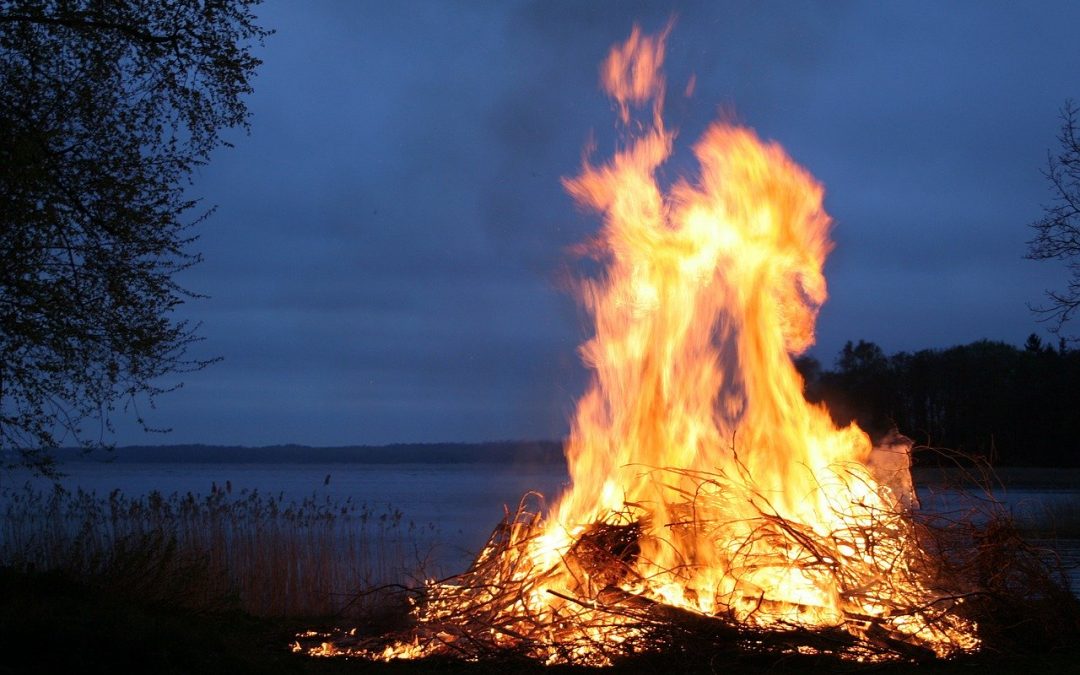
Our ancestors gathered to honour the life force in all its generous abundance. They prayed for protection from summer storms, lightning and fire, blessed their grain stores, fields and livestock, and gave thanks for the promise of the coming harvest. Bonfires were lit across hillsides and villages, symbolising the fullness of the Sun’s power. Young couples leapt hand in hand across the flames, receiving the fire’s symbolic blessing for love, health and fertility.

Midsummer Herbs: Gathering Nature’s Healing Gifts

For herbalists, Midsummer is one of the most important harvesting seasons of the year. Many medicinal plants have now reached the height of their potency, filled with the warmth and energy of the summer sun. Traditionally, herbs gathered around the Summer Solstice were believed to possess exceptional healing and protective virtues, making this the perfect time to replenish the annual stores.

Among the classic herbs of Midsummer are:

St. John’s Wort (Hypericum perforatum)
The quintessential herb of the Summer Solstice, its brilliant golden flowers seem to capture the very essence of sunlight. Traditionally gathered around St John’s Day, it has long been associated with protection, light, courage and emotional resilience.

Mugwort (Artemisia vulgaris)
A sacred plant of travellers, dreamers and seers, mugwort has been used for centuries in divination, purification and vision work. Worn as a protective garland or burned as incense, it is closely linked with Midsummer traditions throughout Europe.

Vervain (Verbena officinalis)
One of the most revered ritual herbs of the ancient world, vervain was regarded as sacred by Druids and Romans alike. It symbolises blessing, peace and spiritual insight, and was often gathered ceremonially at the height of summer.

Chamomile (Matricaria chamomilla)
Its cheerful golden centres reflect the midsummer sun. Chamomile reminds us that gentleness is itself a form of strength, bringing calm to the body while encouraging harmony and contentment.

Mullein (Verbascum thapsus)
Its tall flowering spires stand like golden torches in fields and along country lanes. Traditionally associated with protection and courage, mullein was also carried as a ceremonial torch during seasonal celebrations.

Ground Ivy (Glechoma hederacea)
An ancient medicinal herb that cheekily carpets woodland edges and sometimes the lawn, Ground Ivy reminds us that some of nature’s greatest gifts are easily overlooked. This humble little herb served as a magical flavouring herb and strengthened the potency of the Mid-Summer Ale. 

The Spiritual Meaning of the Summer Solstice

Spiritually, the Summer Solstice marks a threshold in the Wheel of the Year. Standing halfway through the annual cycle, it invites us to pause and reflect before the wheel begins its gradual turn towards full summer mode and eventually, autumn. It is the perfect moment to seek guidance by divination, or to retreat on a vision quest to hold counsel with the gods. At this halfway point of the wheel of the year, we reflect on the previous 6 months.

How is your inner garden flourishing?

Have the seeds you planted in spring begun to grow?

Are they flowering and showing signs of future harvest?

Have you remained true to the intentions you set at the beginning of the year, or have life’s unexpected turns lured you off into the tall grass along the way?

Perhaps those original goals no longer feel meaningful. Growth often changes our perspective. Midsummer reminds us that changing direction is not failure but wisdom. It offers an opportunity to pause, realign and reconnect with our deeper purpose before continuing the journey through the second half of the year.

If your path feels uncertain, this is a wonderful time for quiet contemplation, meditation, pilgrimage, divination or a solitary walk through woodland or meadow. However we choose to listen, Midsummer encourages us to quiet the constant chatter of everyday life so that the softer voice of intuition can once again be heard.

Celebrating the Joy of Midsummer

Above all, Midsummer is a festival of joy. It is a time to gather with family and friends, light bonfires beneath the lingering twilight, dance, feast, sing and celebrate the extraordinary abundance of life itself.

The twelve days surrounding the Summer Solstice invite us to step outside our usual routines and simply be present. To watch the sunset without hurry. To breathe the fragrance of wild herbs. To walk barefoot across warm grass. To give thanks for the beauty that surrounds us and for our own place within the great web of life.

A Personal Reflection

While the symbolic truth of this special time is always true, some years it feels like the magical realms are more remote and it is harder to cross the threshold.

This year, the Summer Solstice arrived beneath an unforgiving heatwave. Long before the wheel has fully turned, drought has begun to parch the land, threatening crops, wildlife and the delicate balance upon which all life depends. Nature—including us humans—is under increasing pressure, much of it of our own making, while across the world, violent conflict continues to bring suffering and uncertainty.

Sorrow eclipses my joy. It is difficult to celebrate the abundance of life without also acknowledging its vulnerability. And yet, perhaps that, too, is part of the deeper teaching of Midsummer. To celebrate wholeheartedly while recognising that every gift carries with it a responsibility to protect what we love.

So this year, I find myself seeking stillness rather than spectacle, offering gratitude alongside concern, and adding a simple prayer to the ancient blessings of the season:

May wisdom guide us.

May the Earth be healed.

And above all, may lasting peace return to all.

Happy Summer Solstice.
Imbolc Awakenings

Imbolc Awakenings


Imbolc Reflections: The Return of the Light and the Stirring of Life

Winter is still with us, though it has entered a moody and changeable phase. One day it is frosty, stormy, and inhospitable; a few days later, the sun pops out to tease us with warmth and brightness. And yet, despite winter’s lingering grip, there is one unmistakable sign that something has shifted: the days are noticeably longer now. Light is returning, minute by minute, almost imperceptibly, but with unstoppable determination.

Imbolc marks this subtle turning point of the year. At the beginning of February, it stands midway between the Winter Solstice and the Spring Equinox, heralding the first stirrings of new life, the breaking of the waters. In nature, the snow and ice begins to thaw.

Traditionally associated with Brighid, the Maiden Goddess of light, fire, poetry, and healing, Imbolc celebrates the increasing warmth of the sun and the promise of renewal and fertility of the Earth. Each passing day brings a few more precious minutes of daylight as the sun climbs higher in the sky.

To be sure, it is still winter. Frost may still coat the ground, and cold winds still remind us that the season has not yet released its hold. But if you look closely, signs of awakening are everywhere. Buds swell on bare branches, full of energy and intent. Beneath the soil, last season’s seeds soak up the  moisture, preparing for germination. The sap begins to gurgle and rise again. The wheel of the seasons is turning, even if the movement is slow and largely unseen.

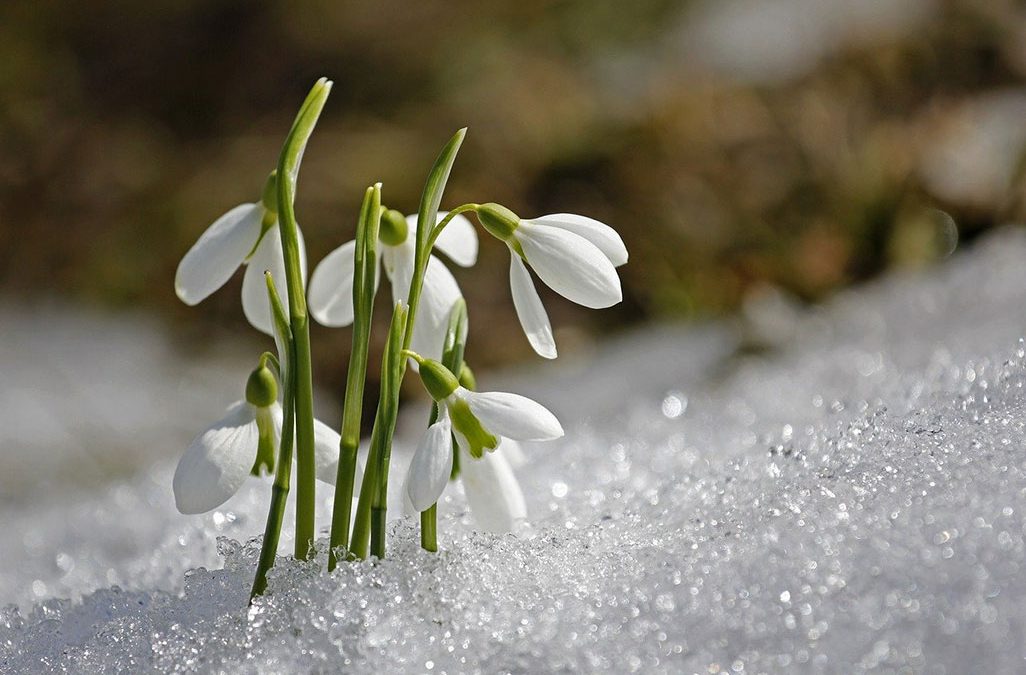
Some plants announce this change bravely. Snowdrops pierce frozen ground, their white bells nodding gently above leaf litter and snow. Winter aconite flashes sudden gold in dark corners of the garden. Dwarf irises and other early bloomers defy the odds, reminding us that life does not wait for perfect conditions. The life force stirs deep within the Earth, and within ourselves.

Imbolc, Candlemas, and the Theme of Purification

Imbolc is also known as Candlemas in the Christian calendar, a festival of light, cleansing, and spiritual preparation. Traditionally, this was a time of purification — both inward and outward — preparing body and soul for the coming cycle of growth.

In the past, this marked the approach of Lent, a period of fasting and abstinence. Heavy winter foods were gradually reduced, allowing the body to cleanse itself and regain vitality after the long months of cold and scarcity. This rhythm mirrored nature’s own process: a shedding of excess, a clearing of space, a readiness for renewal.

Symbolically, Imbolc invites us to do the same. To let go of what no longer serves us. To simplify, to clear, and to make room — not through force, but through gentle attention and care.


Plants of Imbolc: Messengers of the Light

Imbolc is deeply connected with plants that signify resilience, purity, and renewal. These plants can be braided into the season as symbolic and practical points of connection.

Snowdrop (Galanthus nivalis)
A classic plant of Imbolc, snowdrops symbolise hope, purity, and determination. Their appearance amidst frost and snow marks the first visible sign that winter’s harsh grip is waning.

Hazel (Corylus avellana)
Associated with wisdom, inspiration, and poetic insight, hazel is sacred to Brighid. Hasel is a transmitter of cosmic energies and symbolizes inner knowing and the spark of creative vision that emerges during this liminal time.

Birch (Betula spp.)
A tree of beginnings and renewal, birch is often one of the first trees to leaf out after winter. It symbolises purification, fresh starts, and the clearing out of the old and unneeded.

Almond (Prunus dulces)
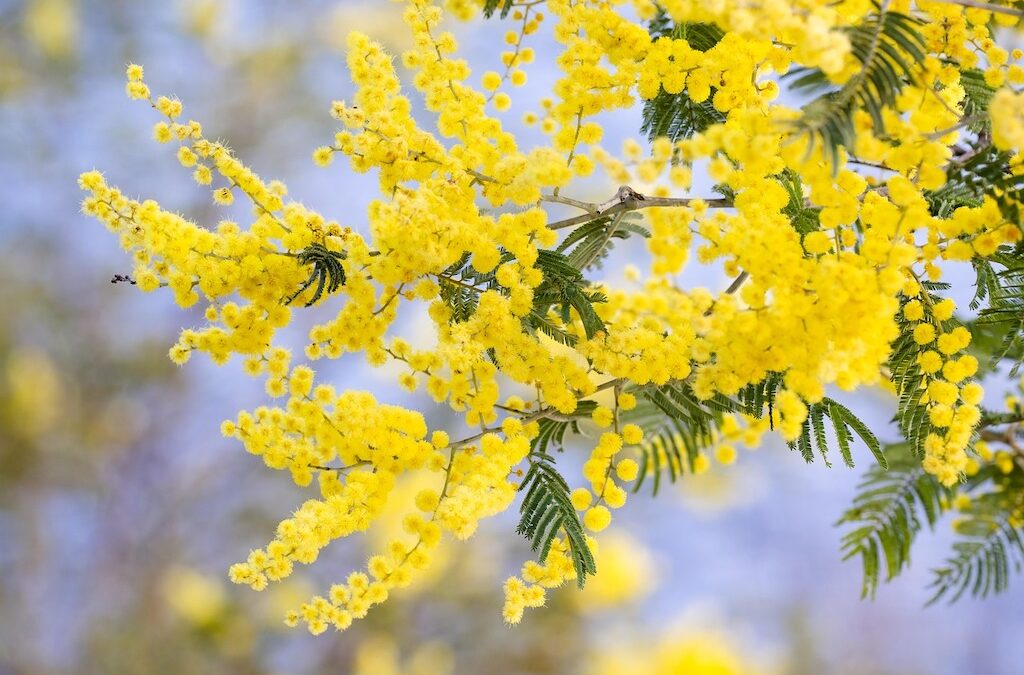
In Mediterranean climates, the Almond tree is an early harbinger of spring. Its pinkish white flowers adorn the still barren landscape, a promise of abundance and fecundity to come.

Rosemary (Salvia rosmarinus)
An evergreen herb traditionally associated with memory, clarity, and protection, rosemary bridges winter and spring. Its resilience reflects the continuity of life even during dormancy.

Imbolc as a Time of Vision and Intention

Imbolc is a threshold — a liminal space between what has been and what is yet to come. At this time, a space opens allowing us to pause and look inward. To reflect honestly on our strengths and weaknesses, our virtues and our shadows. To ask ourselves difficult but necessary questions.

What nourishment does your soul need now?
What intentions are quietly forming within you?
How do you wish to give back to life as the year unfolds?
Are you walking your talk?

Imbolc is a time for purification, vows, affirmations, and quiet commitments rather than grand declarations. Seeds — literal or symbolic — are selected, setting intentions. Tend to your inner flame and protect it from harsh winds and careless neglect.

Growth begins long before it becomes visible. The light is still dim, but it is growing steadily. Tend it gently. Soon the sun will rise higher, its warmth growing stronger with each passing day. And when it does, life — both within and without — will surge to fullness once more.

Winter Solstice Reflections

Winter Solstice Reflections

Winter Solstice Reflections: Honouring the Longest Night and the Return of the Light

Winter Solstice Blessings for the Darkest Time of the Year

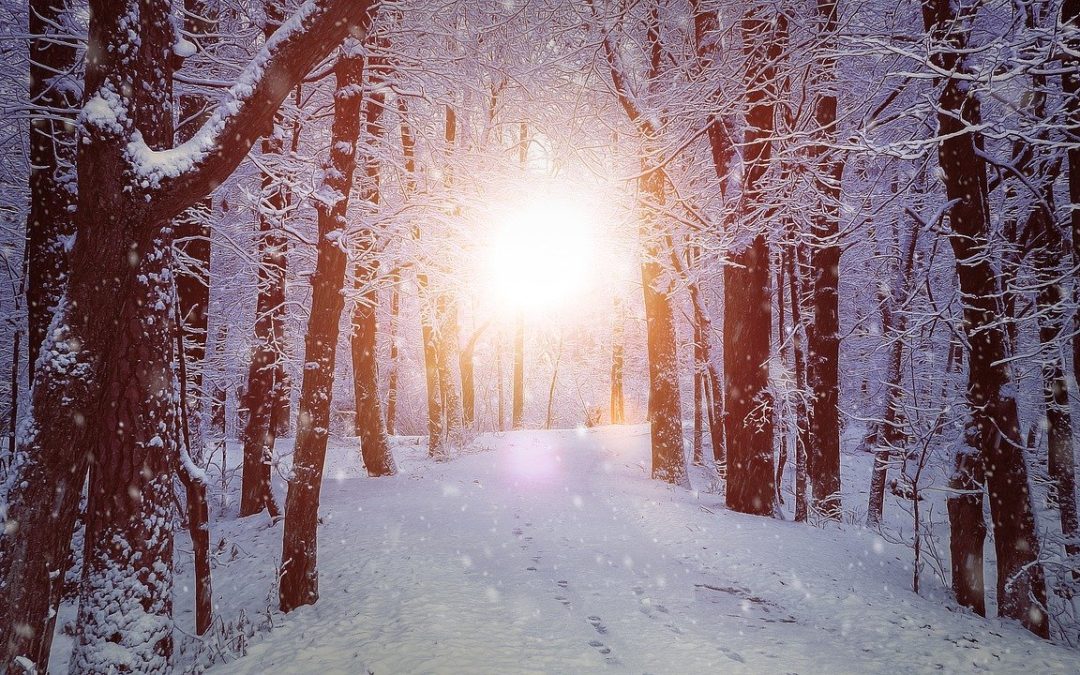
The Winter Solstice marks the shortest day and the longest night of the year, a sacred turning point in the seasonal cycle. The trees have shed their leaves, standing stripped and skeletal against the sky. All visible signs of life have retreated below ground, withdrawn into roots, seeds, and buds, slumbering until they are awoken by the growing light. Frozen in time, the land lies barren and still. Barely rising above the horizon, the Sun sends only a few pale, hesitant rays of light — more a promise than a presence. The birds have left on their long journeys to milder climes, their songs replaced by silence. The Earth has entered its deep hibernation, holding its breath.

At the Winter Solstice, the Light is Reborn

This season can feel stark, even unforgiving. The darkness is long, the cold persistent, and the days seem reluctant to begin. And yet, it is precisely at this moment — at the very depth of the dark — that we find cause to rejoice. For deep within the Earth, unseen and protected, a tiny spark of light is born. Fragile as a newborn in its crib, the sun-saviour god returns, not in triumph, but in vulnerability. The light does not blaze; it flickers. It asks for patience, trust, and care.

We stand on the threshold of a new cycle, not yet certain how it will unfold, not yet sure whether this tender beginning will thrive. And yet, where there is life, there is hope. The Winter Solstice reminds us that renewal does not arrive with noise or certainty, but quietly — almost imperceptibly — in the darkest hour.

In the old days, the twelve days of Christmas marked a liminal time: a pause between what has been and what is yet to come. The veil between the worlds was believed to be at its thinnest, and spirits could pass through more easily. The same is true of the days surrounding the Summer Solstice, when light reaches its zenith before beginning its slow decline. These moments are thresholds, times outside ordinary time. Otherworldly beings, ancestral presences, and forgotten memories wander among the living, reminding us that reality is layered, and that we are never as separate as we imagine.

Sacred Plants associated with the Winter Solstice and  Christmas:

Follow the links to the Encyclopaedia entry to learn more:

Frankincense (Boswellia spp.)
Traditionally burned as sacred incense, frankincense is associated with prayer, purification, and the rising of light from darkness. Its resin connects the earthly and the divine, making it a powerful Winter Solstice ally.

Myrrh (Commiphora myrrha)
A plant of grief, healing, and protection, myrrh reminds us that darkness is not absence, but depth. It accompanies rites of mourning, transition, and rebirth.

Fir (Abies spp.)
Evergreen through the darkest months, fir symbolises endurance, continuity, and life that persists beneath the snow.

Mistletoe (Viscum album)
Sacred to the Druids, mistletoe grows between worlds — neither rooted in earth nor fully of the sky — embodying liminality and renewal.

Holly (Ilex aquifolium)
Evergreen and thorny, holly is a guardian of the dark season. Its bright red berries are the original Christmas-tree baubles, glowing bright in the monochrome landscape and offering nourishment to overwintering birds.

Winter Solstice Reflections

The Winter Solstice is, above all, a time of reflection. A time to sit with memory, to honour what has been, and to acknowledge both loss and growth. We are called to turn inward, to listen more deeply, and to take stock of the year that is drawing to a close. Not every year is gentle. Not every journey is easy. There may have been grief, uncertainty, or exhaustion along the way. Yet even in difficult years, there are moments of kindness, connection, and resilience to be grateful for — small lights that sustained us through the pain.

In the quiet space of the Winter Solstice, we reflect on gratitude: on love given and received, on care extended to others and, perhaps, finally to ourselves. We remember the importance of being there for one another — of showing up, even imperfectly, in a world that so often asks too much. We allow ourselves to dream, gently and without pressure, about our hopes for the year ahead. Not grand resolutions, perhaps, but intentions: how to live more truthfully, more compassionately, and more in tune with what truly matters.

Winter Solstice – A Turning Point on the Wheel of Time

The Winter Solstice marks a turning point. Though the cold may deepen and winter still lies ahead, the light has begun its return. Each day from now on carries a little more brightness than the last. The promise of a new dawn is already woven into the dark.

may your light shine bright.

Count your blessings and celebrate hope. The Wheel of Time is turning, as it always does. The light is returning — quietly but surely. Let us cherish and protect this tiny flame of hope, tending it with care. And when its fire grows stronger, life will once more stir, rise, and return to the Earth.

Lughnasad – Harvest Time

Lughnasad

The time of the grain harvest

Lughnasad marks the harvest season. Fruits and vegetables ripen, the grain has turned golden, and the grapes are getting plump and sweet. It is an intensely busy time, especially for gardeners. We toiled in the spring, and now it is time to harvest the fruit of our labour and enjoy the gifts of the season. 

The period from spring to late summer is joyous, but also fraught with danger. Late frosts can kill sensitive starts, and summer storms or wildfires may ruin a crop in just a few minutes. A good harvest is never guaranteed. Every year, the devastating effects of climate change are becoming increasingly evident, endangering the agricultural practices on which our lives have come to depend. Where I am, after many years of exceedingly hot and dry springs and summers, this year we had unseasonably wet weather. Without water, there is no life. But too much water can be devastating, especially when it falls as rain, all at once, washing away the topsoil, and drowning plants and animals and flooding basements and worse.


In the Christian tradition, Lammas marks the harvest season. The name comes from the Anglo-Saxon word ‘hlaf-mas’, meaning ‘loaf mass’. Bread and wine are the traditional sacraments of the Eucharists. It is the time of the ripening corn, and the grape harvest.


But the harvest is only one stage of the perpetual cycle of life. Ideally, what we reap now should sustain and nourish us through the dark season, when the Earth is barren and still. Part of the harvest is set aside and returned to the earth. We reap as we sow, but we also sow what we reap.

Facing the unravelling climate catastrophe, we are grateful for anything we can harvest today. But if we want to continue on the agricultural path, we must learn to adapt and live more sustainably. We depend on Mother Earth, and it is time to honour and respect all that she provides.

There are many solutions, but continuing in the ‘business-as-usual’ mode is not among them.

Spring Equinox

Spring Equinox

Spring Equinox is here, and it is time to ponder the miraculous power of regeneration. Persephone has returned to the upper world and life re-awakens. Buds swell, birds sing, and trees burst into flower. There is joy and exuberance – despite the craziness, suffering and sorrow we witness every day.

At the Spring Equinox, light and dark hang in the balance. From now on, the sun gathers strength with every passing day. Mother Earth, violated and marred by war, yet again, dons her spring garment and gradually turns the land lush and green.

Spring Equinox – Focus on what matters most

The garden calls, and the soil eagerly receives the seeds. Are you tending your garden? What will you grow this season? Where is your energy going and what habits will you cultivate?

The garden is a physical space, as well as a metaphorical one. The inner ‘garden’ also needs attentive care, weeding, pruning and nurturing.

At home, it is time to clear out the winter dust. Spring-cleaning, painting, and decorating are on the agenda.

Likewise, the body also needs cleansing and care. Boost your energy and vital spirit with fresh vitamins and the nutrients of early spring herbs. When the body is strong, so is the mind!


Spring Equinox – Celebrate life

Get ready for the season, invite the sunshine in, and make the most of these fleeting joys! Life becomes infinitely rich when we walk mindfully and celebrate each flower or butterfly we meet along the way.

Focus on what matters most to you and make your intentions clear. Life is short and precious. The power to make your garden flourish lies in your hands. Use it.

The Spring Equinox is a time of new beginnings. Let’s celebrate the mysteries of rejuvenation and eternal return, tender yet charged with the energy of daring and boldness. 

Autumn Equinox

Autumn Equinox

Happy Autumn Equinox!

On the Autumn Equinox, night and day are equal. Light and dark are in perfect balance. The Equinox marks the beginning of the end of the harvest season. We celebrate the gifts of the Earth and give thanks. In the Northern Hemisphere, the life-force begins its slow decline as it retreats into the subterranean realm of Hades. The days are getting shorter and cooler; summer is over. We celebrate the joys of the summer and are grateful for the harvest blessings. 

The end of the summer is often intensely busy with hunting for nuts and mushrooms, preserving the gifts of the Earth and preparing for the coming dark season.
Stock up the larder and gather the supplies you need to see you through the winter. 

Returning to work, we concentrate and focus on our projects and goals. But don’t forget to enjoy the pleasures of this in-between season, as nature explodes its dazzling display of autumn colours.

Image by Sabrina Ripke from Pixabay