Imbolc Reflections: The Return of the Light and the Stirring of Life
Winter is still with us, though it has entered a moody and changeable phase. One day it is frosty, stormy, and inhospitable; a few days later, the sun pops out to tease us with warmth and brightness. And yet, despite winter’s lingering grip, there is one unmistakable sign that something has shifted: the days are noticeably longer now. Light is returning, minute by minute, almost imperceptibly, but with unstoppable determination.
Imbolc marks this subtle turning point of the year. At the beginning of February, it stands midway between the Winter Solstice and the Spring Equinox, heralding the first stirrings of new life, the breaking of the waters. In nature, the snow and ice begins to thaw.
Traditionally associated with Brighid, the Maiden Goddess of light, fire, poetry, and healing, Imbolc celebrates the increasing warmth of the sun and the promise of renewal and fertility of the Earth. Each passing day brings a few more precious minutes of daylight as the sun climbs higher in the sky.
To be sure, it is still winter. Frost may still coat the ground, and cold winds still remind us that the season has not yet released its hold. But if you look closely, signs of awakening are everywhere. Buds swell on bare branches, full of energy and intent. Beneath the soil, last season’s seeds soak up the moisture, preparing for germination. The sap begins to gurgle and rise again. The wheel of the seasons is turning, even if the movement is slow and largely unseen.
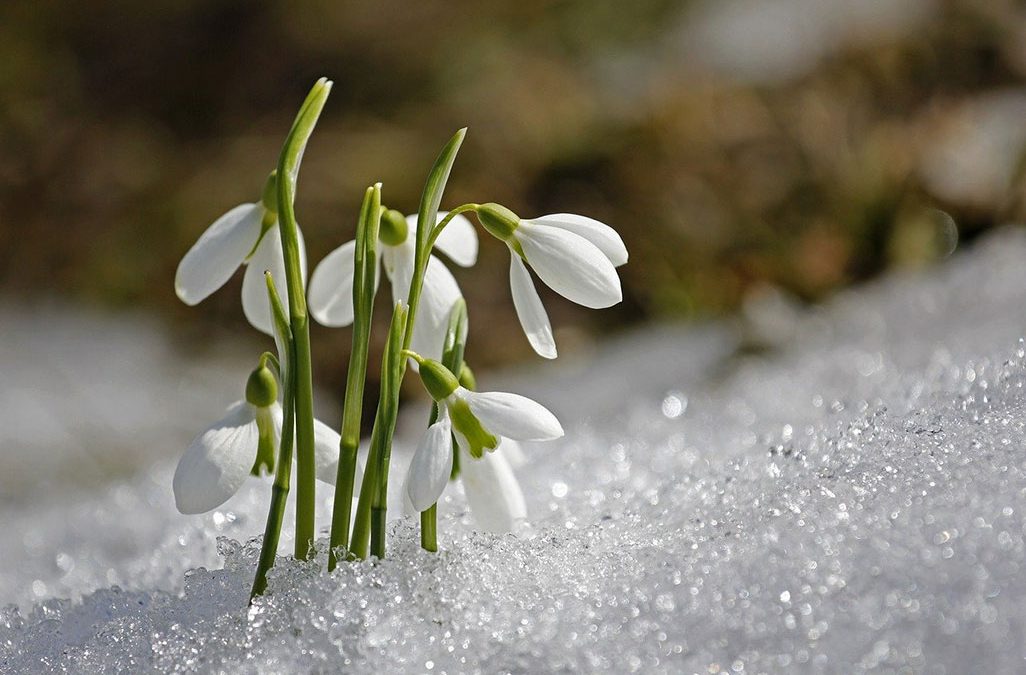
Some plants announce this change bravely. Snowdrops pierce frozen ground, their white bells nodding gently above leaf litter and snow. Winter aconite flashes sudden gold in dark corners of the garden. Dwarf irises and other early bloomers defy the odds, reminding us that life does not wait for perfect conditions. The life force stirs deep within the Earth, and within ourselves.
Imbolc, Candlemas, and the Theme of Purification
Imbolc is also known as Candlemas in the Christian calendar, a festival of light, cleansing, and spiritual preparation. Traditionally, this was a time of purification — both inward and outward — preparing body and soul for the coming cycle of growth.
In the past, this marked the approach of Lent, a period of fasting and abstinence. Heavy winter foods were gradually reduced, allowing the body to cleanse itself and regain vitality after the long months of cold and scarcity. This rhythm mirrored nature’s own process: a shedding of excess, a clearing of space, a readiness for renewal.
Symbolically, Imbolc invites us to do the same. To let go of what no longer serves us. To simplify, to clear, and to make room — not through force, but through gentle attention and care.