
Sacred Earth
Exploring Nature and Culture
Nature Notes:
No Results Found
The page you requested could not be found. Try refining your search, or use the navigation above to locate the post.
Current issue
Plant Profile:
Summer Solstice
Summer Solstice Reflections:
Celebrating Midsummer, Healing Herbs and the Turning of the Wheel
At Summer Solstice, the Sun has reached the glorious peak of its annual journey. Its light and warmth lingers long into the balmy evenings. The scent of Honeysuckle and Roses perfumer the air, crickets chirp tirelessly, while nightingales serenade the falling night. Meadows shimmer with wildflowers, bees move busily from blossom to blossom, and the first grains begin to ripen beneath an expansive blue sky. We celebrate the longest day and shortest night. A magical time, when the veil between the worlds is gossamer thin and otherworldly beings can easily cross between, like wisps of mist betwixt the trees.
The Summer Solstice: A Celebration of Light and Abundance
In Celtic mythology, the Summer Solstice, marks the time when the young Sun-God Belenos and the Earth Goddess have reached the peak of their ecstatic embrace. Nature rejoices and joins their rapture. At this threshold moment we celebrate the life-force in all its abundance and vitality.
Traditionally, Midsummer celebrations extended over twelve days, corresponding to the twelve sacred days of Midwinter and Christmas. This liminal season represents a threshold between the waxing and waning halves of the year. In this twilight zone magic happened, blessings carried particular power and the unseen world drew close to our own.
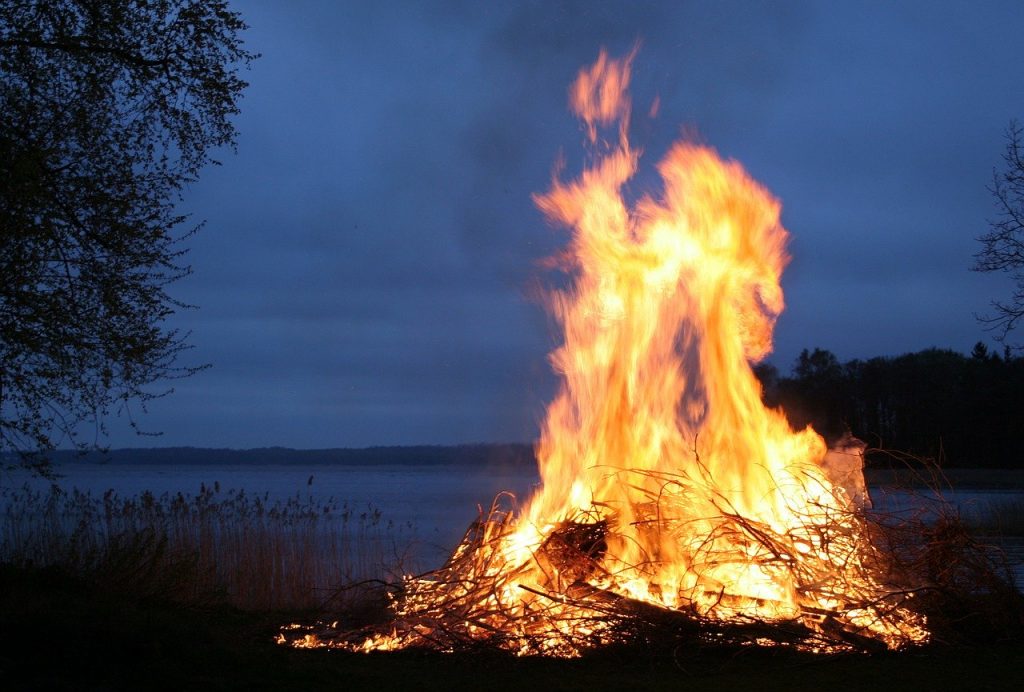
Our ancestors gathered to honour the life force in all its generous abundance. They prayed for protection from summer storms, lightning and fire, blessed their grain stores, fields and livestock, and gave thanks for the promise of the coming harvest. Bonfires were lit across hillsides and villages, symbolising the fullness of the Sun’s power. Young couples leapt hand in hand across the flames, receiving the fire’s symbolic blessing for love, health and fertility.
Midsummer Herbs: Gathering Nature’s Healing Gifts
For herbalists, Midsummer is one of the most important harvesting seasons of the year. Many medicinal plants have now reached the height of their potency, filled with the warmth and energy of the summer sun. Traditionally, herbs gathered around the Summer Solstice were believed to possess exceptional healing and protective virtues, making this the perfect time to replenish the annual stores.
Among the classic herbs of Midsummer are:
St. John’s Wort (Hypericum perforatum)
The quintessential herb of the Summer Solstice, its brilliant golden flowers seem to capture the very essence of sunlight. Traditionally gathered around St John’s Day, it has long been associated with protection, light, courage and emotional resilience.
Mugwort (Artemisia vulgaris)
A sacred plant of travellers, dreamers and seers, mugwort has been used for centuries in divination, purification and vision work. Worn as a protective garland or burned as incense, it is closely linked with Midsummer traditions throughout Europe.
Vervain (Verbena officinalis)
One of the most revered ritual herbs of the ancient world, vervain was regarded as sacred by Druids and Romans alike. It symbolises blessing, peace and spiritual insight, and was often gathered ceremonially at the height of summer.
Chamomile (Matricaria chamomilla)
Its cheerful golden centres reflect the midsummer sun. Chamomile reminds us that gentleness is itself a form of strength, bringing calm to the body while encouraging harmony and contentment.
Mullein (Verbascum thapsus)
Its tall flowering spires stand like golden torches in fields and along country lanes. Traditionally associated with protection and courage, mullein was also carried as a ceremonial torch during seasonal celebrations.
Ground Ivy (Glechoma hederacea)
An ancient medicinal herb that cheekily carpets woodland edges and sometimes the lawn, Ground Ivy reminds us that some of nature’s greatest gifts are easily overlooked. This humble little herb served as a magical flavouring herb and strengthened the potency of the Mid-Summer Ale.
The Spiritual Meaning of the Summer Solstice
Spiritually, the Summer Solstice marks a threshold in the Wheel of the Year. Standing halfway through the annual cycle, it invites us to pause and reflect before the wheel begins its gradual turn towards full summer mode and eventually, autumn. It is the perfect moment to seek guidance by divination, or to retreat on a vision quest to hold counsel with the gods. At this halfway point of the wheel of the year, we reflect on the previous 6 months.
How is your inner garden flourishing?
Have the seeds you planted in spring begun to grow?
Are they flowering and showing signs of future harvest?
Have you remained true to the intentions you set at the beginning of the year, or have life’s unexpected turns lured you off into the tall grass along the way?
Perhaps those original goals no longer feel meaningful. Growth often changes our perspective. Midsummer reminds us that changing direction is not failure but wisdom. It offers an opportunity to pause, realign and reconnect with our deeper purpose before continuing the journey through the second half of the year.
If your path feels uncertain, this is a wonderful time for quiet contemplation, meditation, pilgrimage, divination or a solitary walk through woodland or meadow. However we choose to listen, Midsummer encourages us to quiet the constant chatter of everyday life so that the softer voice of intuition can once again be heard.
Celebrating the Joy of Midsummer
Above all, Midsummer is a festival of joy. It is a time to gather with family and friends, light bonfires beneath the lingering twilight, dance, feast, sing and celebrate the extraordinary abundance of life itself.
The twelve days surrounding the Summer Solstice invite us to step outside our usual routines and simply be present. To watch the sunset without hurry. To breathe the fragrance of wild herbs. To walk barefoot across warm grass. To give thanks for the beauty that surrounds us and for our own place within the great web of life.
A Personal Reflection
While the symbolic truth of this special time is always true, some years it feels like the magical realms are more remote and it is harder to cross the threshold.
This year, the Summer Solstice arrived beneath an unforgiving heatwave. Long before the wheel has fully turned, drought has begun to parch the land, threatening crops, wildlife and the delicate balance upon which all life depends. Nature—including us humans—is under increasing pressure, much of it of our own making, while across the world, violent conflict continues to bring suffering and uncertainty.
Sorrow eclipses my joy. It is difficult to celebrate the abundance of life without also acknowledging its vulnerability. And yet, perhaps that, too, is part of the deeper teaching of Midsummer. To celebrate wholeheartedly while recognising that every gift carries with it a responsibility to protect what we love.
So this year, I find myself seeking stillness rather than spectacle, offering gratitude alongside concern, and adding a simple prayer to the ancient blessings of the season:
May wisdom guide us.
May the Earth be healed.
And above all, may lasting peace return to all.
Happy Summer Solstice.
More articles:
No Results Found
The page you requested could not be found. Try refining your search, or use the navigation above to locate the post.